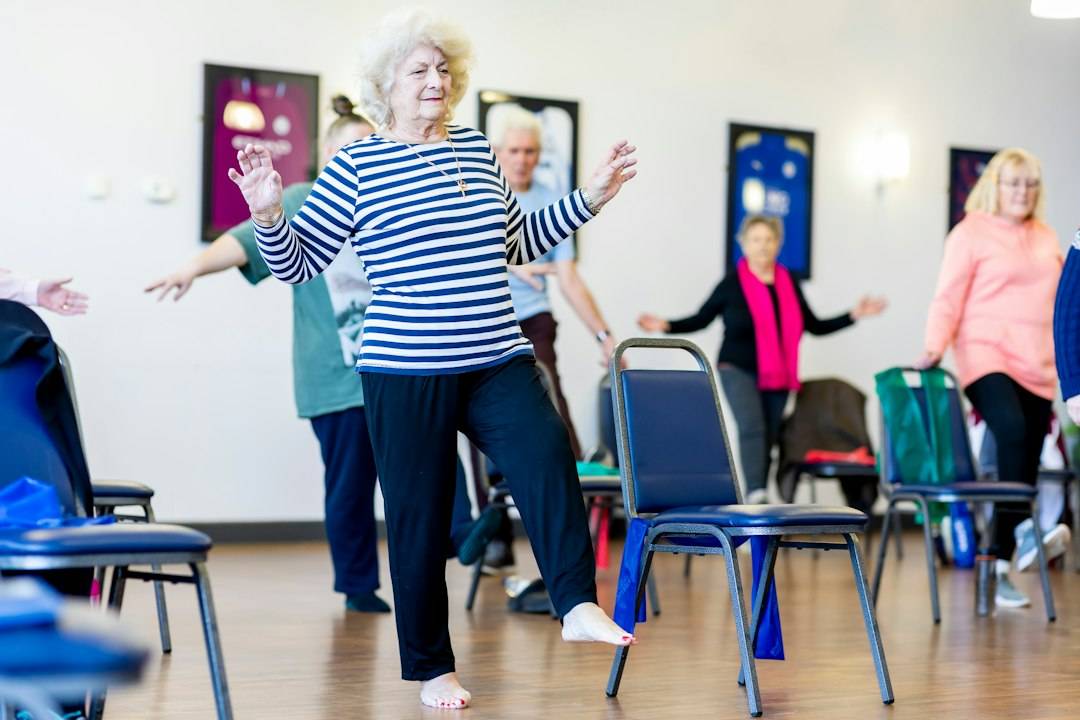
If standing workouts feel too difficult, tiring or simply unrealistic right now, chair exercises can be a practical way to start moving more. They can help you build a routine, practise controlled movement and reduce long periods of sitting without needing a gym or complicated equipment.
The NHS has a dedicated set of gentle sitting exercises for people who have not done much exercise for a while. Its guidance recommends a solid, stable chair without wheels, comfortable clothing, water nearby and building up gradually.
This guide is for beginners who want a simple home routine. It is general movement guidance, not a treatment plan for pain, injury or a medical condition.
Who chair exercises can suit
Chair-based movement can be useful if you are new to exercise, spend long periods sitting, feel unsteady standing for a long time, are rebuilding confidence after a less active period, or simply want a lower-impact option on busy days.
You do not need to be older to use chair exercises. They can also work as movement breaks for office workers, a starting point before progressing to standing routines, or an alternative when space is limited.
If your main problem is desk stiffness rather than general fitness, BetterCare’s desk stretches for office workers gives a more workday-focused routine.
Before you start: set up the chair safely
- Use a solid chair that does not have wheels.
- Place it on a surface where it will not slide.
- Sit so your feet can rest flat on the floor.
- Keep enough space around you to move your arms and legs freely.
- Wear comfortable clothes and supportive footwear if you will also stand.
- Keep water nearby.
If you are unsure whether exercise is suitable because of a health condition, recent operation, recent heart event, dizziness, unexplained symptoms or an injury, get individual advice before starting. Stop if you become unwell or develop pain that is not simply normal muscular effort.
A simple 10-minute chair routine
You can do the following sequence once, or repeat parts that feel comfortable. Move slowly enough that you stay in control. Beginners do not need to chase speed.
1. Seated posture reset
Sit towards the front half of the chair with your feet flat and about hip-width apart. Let your arms rest by your sides. Gently draw your shoulders back and down, lengthen through the top of your head and take three relaxed breaths.
This is not an exercise you need to “hold perfectly”. It is simply a reset before moving.
2. Seated marching
Lift one knee a comfortable distance, lower it with control, then lift the other. Alternate sides. Start with 10 lifts in total, rest, then repeat if comfortable.
The NHS sitting-exercise routine includes hip marching as a way to work the hips and thighs while also maintaining movement through the legs.
3. Ankle point and flex
Extend one leg slightly so the heel is off the floor. Point the toes away, then bring them back towards you. Repeat 5 to 10 times, then change legs.
Keep the movement smooth. There is no benefit in forcing your ankle into an uncomfortable range.
4. Seated heel raises
Keep the balls of both feet on the floor and slowly lift your heels, then lower them. Repeat 8 to 12 times. This is a simple way to get the lower legs working without standing.
5. Seated toe raises
Keep your heels on the floor and lift your toes, then lower them. Repeat 8 to 12 times. Alternate heel raises and toe raises if you want a simple rhythm.
6. Upper-body twist
Cross your arms over your chest or place your hands on opposite shoulders. Keeping your hips facing forward, gently turn your upper body to one side, return to centre, then turn to the other side.
Use a comfortable range. The NHS sitting routine recommends controlled upper-body turning rather than forcing the movement.
7. Shoulder rolls
Lift your shoulders gently towards your ears, roll them back and down, then repeat. After 5 slow circles, change direction. This can be useful after prolonged computer or phone use.
8. Seated arm reach
Reach one arm forward at shoulder height, bring it back, then change sides. Next, if comfortable, reach both arms forward together. Keep your ribs relaxed rather than leaning far back.
9. Knee extension
Straighten one knee until the leg is extended comfortably, pause briefly, then lower the foot. Repeat 5 to 8 times per side.
If the movement causes knee pain, reduce the range or leave it out rather than pushing through.
10. Sit-to-stand progression
If standing is safe for you, finish with 3 to 5 slow sit-to-stands. Move towards the edge of the chair, place your feet firmly, lean slightly forward and stand using your legs as much as you comfortably can. Then lower back slowly.
The NHS includes sit-to-stand work in its home strength exercises. If you are not ready for this, simply repeat another seated movement instead.
How hard should chair exercise feel?
For a beginner, the main goal is controlled movement and consistency. You should usually be able to speak normally during a gentle chair session. Muscles may feel as though they are working, but sharp pain, chest pain, sudden breathlessness, faintness or feeling acutely unwell are reasons to stop.
You can make the routine more challenging by adding a few repetitions, moving with better control, adding another round, or combining it with a short walk. You do not need to add all of these at once.
How often should you do chair exercises?
The NHS sitting-exercise page suggests trying its gentle routine at least twice a week and gradually increasing repetitions. For overall health, the NHS adult physical activity guidelines recommend daily activity, reducing long periods of sitting and doing strengthening activity for the major muscle groups on at least two days each week.
If you are 65 or over, NHS guidance similarly recommends being active every day where possible and including strength, balance and flexibility work at least twice a week.
Chair exercises are not the whole activity plan
Seated movement is useful, but many people can gradually add some standing or walking as confidence improves. If your goal is to start walking regularly, BetterCare’s 6-week walking plan for beginners provides a gradual next step.
If you want a short mixed routine without jumping, try the 10-minute low-impact beginner workout.
How to progress without making the routine complicated
Progress can be simple. Choose only one change at a time:
- add 2 repetitions to one or two movements;
- repeat the routine twice instead of once;
- reduce how much you rely on the chair back during a standing movement;
- add a 5-minute walk afterwards;
- move a little more slowly on strength-focused repetitions.
A routine that you repeat consistently is usually more useful than an ambitious routine you abandon after two sessions.
Chair exercise for people who sit at work
If you work at a desk, a full 10-minute routine may not fit every break. Instead, use one or two movements every hour or two: ankle pumps, seated marching, shoulder rolls, gentle trunk turns, then stand and walk briefly when possible.
This fits the wider public-health message to break up long periods of sitting. A movement break does not need to look like a formal workout to be worthwhile.
What if you get tired quickly?
Split the routine. Do three movements in the morning, three after lunch and the rest later. You can also do fewer repetitions. Starting with 3 controlled repetitions is better than forcing 10 with poor form or becoming exhausted.
If fatigue is new, severe, worsening or unexplained, treat that as a health issue rather than assuming you simply need to exercise harder.
What if standing from a chair is difficult?
Do not turn the sit-to-stand into a test you must pass. Continue with seated movements and practise the standing movement only if it feels safe. A higher, firm chair can be easier than a low sofa. If you need to push through your arms strongly or feel unstable, individual advice from a physiotherapist or other appropriate professional may be useful.
Can you use weights?
You can eventually add light resistance if the basic movements are comfortable and appropriate for you, but weights are not required. A pair of light dumbbells or filled water bottles can make arm movements harder. Start lighter than you think you need and prioritise control.
For a more structured progression, BetterCare’s forthcoming beginner strength guides can sit alongside this chair routine rather than replacing it.
A realistic weekly starter plan
- Monday: 10-minute chair routine.
- Tuesday: short easy walk or usual daily movement.
- Wednesday: 5-minute chair routine plus a few sit-to-stands if suitable.
- Thursday: normal daily movement with extra breaks from sitting.
- Friday: 10-minute chair routine.
- Weekend: one gentle walk or another activity you enjoy.
This is only an example. The best plan is one that matches your current ability and can be repeated.
When to get individual advice
Seek individual guidance before relying on a general routine if you have recently had surgery, a major heart or neurological event, repeated falls, unexplained dizziness, severe breathlessness, significant joint pain, or a condition for which you have been given movement restrictions.
A general web routine should never override rehabilitation instructions or advice from a clinician who knows your situation.
The main goal: build the habit of moving
Chair exercise works best as a starting point, not as a pass-or-fail fitness test. Use a stable setup, choose movements you can control, build gradually and connect the routine with other manageable activity over time.
If you are beginning from a very inactive baseline, consistency is the win. Ten minutes done regularly can be the bridge to walking, standing strength work and a broader weekly activity routine.
Reviewed: September 2026. General UK fitness information for beginners; not a substitute for individual medical or rehabilitation advice.