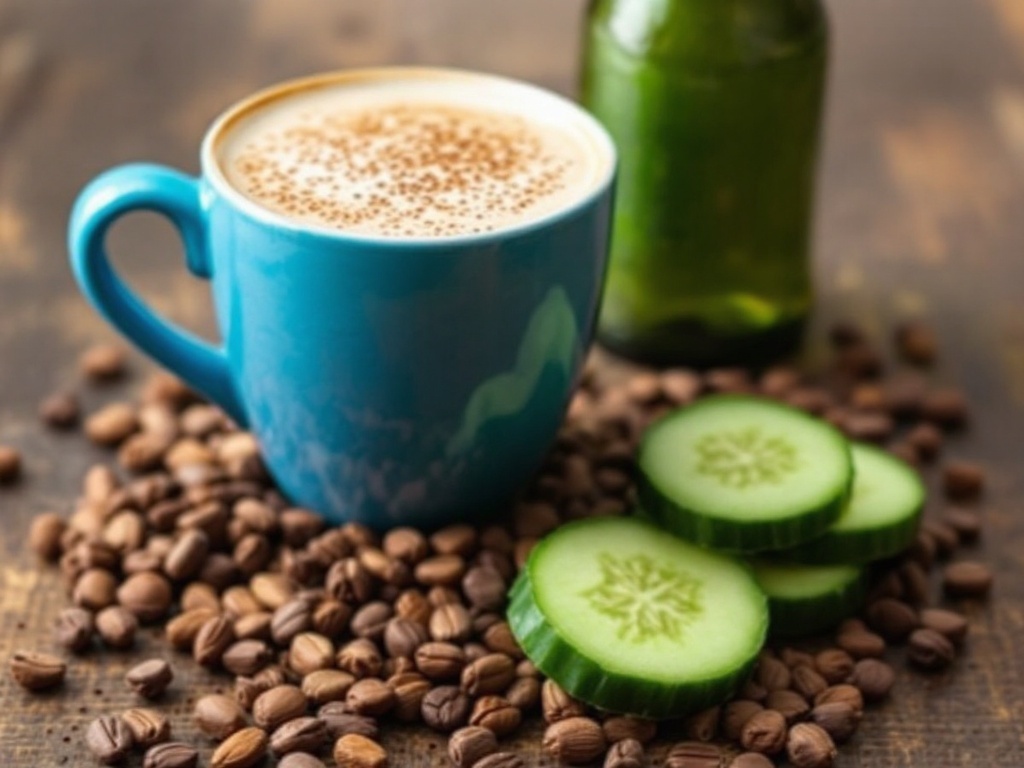
Updated 23 September 2026. Cucumber coffee has appeared in social-media weight-loss content because it combines two familiar ingredients: cucumber, a low-calorie, water-rich food, and coffee, a caffeinated drink that can temporarily affect alertness and metabolism. What it does not have is good clinical evidence showing that the combination specifically burns body fat.
The original cucumber-coffee article described cucumber coffee as a “fat-burning” drink, used detox language, suggested an ideal time for “maximum fat-burning” and presented social-media popularity as evidence of effectiveness. That framing has been removed.
If you enjoy cucumber with cold coffee, there is nothing inherently wrong with the combination for most healthy adults. It can be a low-calorie drink if you keep added sugar, syrup and cream modest. But it should be treated as a beverage—not a weight-loss treatment.
What is cucumber coffee?
There is no standard medical or nutritional definition. Online recipes usually combine cucumber slices or cucumber water with black coffee, cold brew or espresso, sometimes with sparkling water, lemon, mint or sweetener.
That means two drinks labelled “cucumber coffee” can have very different calorie and caffeine contents. A plain iced coffee with cucumber slices may contain very little energy; a version made with syrup, sweetened tonic, cream or condensed milk may contain substantially more.
So before asking whether cucumber coffee helps with weight loss, the more useful question is what is actually in the glass.
Is there evidence that cucumber coffee burns body fat?
BetterCare could not identify a clinical trial showing that cucumber and coffee together cause meaningful body-fat loss. Research exists on caffeine, coffee, energy expenditure and body weight, but that is not the same as testing a cucumber-coffee recipe.
A systematic review and meta-analysis of caffeine and fat metabolism found that caffeine had a small effect on measures of fat metabolism. A small physiological effect is not proof that a particular drink produces meaningful long-term fat loss.
More recent research makes the distinction even clearer. A 2024 systematic review and network meta-analysis of randomised trials of tea and coffee found no clear weight-loss effect from coffee itself, while evidence for small effects from some other beverages was low or very low certainty.
That is why the professional conclusion is simple: coffee may have short-term metabolic effects, but cucumber coffee should not be marketed as a body-fat-burning formula.
What cucumber actually contributes
Cucumber is mostly water and is low in calories. It can add flavour, texture and volume to meals or drinks without adding much energy.
Those qualities can be helpful within a weight-management diet, but cucumber does not contain a compound proven to target stored fat.
Eating cucumber also provides more practical nutritional value than using only cucumber-infused water because you consume the food itself, including some fibre.
If you like cucumber, include it in salads, sandwiches, yoghurt-based dishes, snacks or drinks. It does not need to be paired with coffee to be useful.
What coffee actually contributes
Coffee contains caffeine unless it is decaffeinated. Caffeine can temporarily increase alertness and may produce small changes in energy expenditure and fat oxidation.
An earlier meta-analysis of randomised trials of caffeine and weight outcomes suggested possible effects on weight, BMI and fat mass, but the studies were highly heterogeneous. That uncertainty matters: a research signal does not justify telling readers that an extra cup of coffee will reliably make them lose fat.
Caffeine tolerance also develops. Someone who drinks coffee daily may respond differently from a person who rarely consumes it.
Weight loss still depends on the overall energy balance
If weight loss is appropriate for you, the central requirement is an energy deficit over time. One drink does not override the rest of the diet.
For example, replacing a 300-calorie sweetened drink with unsweetened cucumber coffee could reduce calorie intake—but the benefit comes from the substitution, not from a special interaction between cucumber and caffeine.
By contrast, adding cucumber to a large sweetened latte does not turn it into a fat-loss drink.
For a fuller explanation of food-led weight loss, BetterCare’s guide to losing weight without formal exercise explains how portions, fibre, protein and drinks affect overall energy intake.
Does cucumber coffee “detox” the body?
No evidence supports the idea that cucumber coffee detoxifies the liver, kidneys, blood or fat tissue.
The body already has organs and physiological systems that process and eliminate waste. Drinking enough fluid supports normal function, but a beverage does not need a “detox” label to be hydrating.
If the recipe helps you drink more fluid and replaces a more sugary drink, that may be useful. Call it hydration or preference—not detoxification.
Does cucumber coffee reduce bloating?
Bloating has many causes, including meal size, constipation, certain carbohydrates, fizzy drinks, food intolerances and gastrointestinal conditions.
A cucumber-coffee drink is not a reliable treatment for bloating. In fact, coffee can worsen digestive symptoms for some people, and sparkling versions may increase bloating because of carbonation.
If bloating is persistent, painful, associated with weight loss, blood in the stool or a major change in bowel habit, seek medical advice rather than repeatedly changing “detox” drinks.
Is there a best time to drink cucumber coffee for fat loss?
No. There is no proven clock time at which cucumber coffee produces extra body-fat loss.
If you drink coffee, timing should be based more on caffeine tolerance, sleep and routine. Drinking caffeine late in the day can interfere with sleep in some people, and poor sleep can make healthy eating and activity harder to maintain.
If you use coffee before exercise because it helps you feel alert, that is different from claiming it creates a special fat-burning window.
Can coffee suppress appetite?
Caffeine can affect appetite in some people, but the response is variable and often temporary. It should not be used as a strategy to replace normal meals or ignore persistent hunger.
Trying to “control appetite” with repeated coffee can also lead to excess caffeine, disrupted sleep or a rebound in hunger later.
A more reliable weight-management approach is to build meals around foods that provide protein, fibre and appropriate energy.
How much caffeine is too much?
Caffeine tolerance varies. Too much can cause jitteriness, palpitations, anxiety, headaches, digestive symptoms and sleep disruption.
People who are pregnant should be particularly careful. The NHS advises limiting caffeine to no more than 200 mg per day during pregnancy, including caffeine from coffee, tea, cola, energy drinks, chocolate and some supplements.
If you are sensitive to caffeine, have significant anxiety, heart-rhythm problems or take medicines that interact with stimulants, ask a healthcare professional what is appropriate for you.
Three cucumber-coffee ideas without “fat-burning” claims
1. Iced cucumber black coffee
Brew coffee and allow it to cool. Serve over ice with several thin cucumber slices. Add mint if you enjoy it.
This is naturally low in calories when no sugar or cream is added. Its weight-management relevance comes only from being a low-calorie drink option.
2. Cucumber espresso and sparkling water
Add one shot of espresso to ice, cucumber slices and plain sparkling water. Use lemon or lime for flavour if desired.
Be aware that fizzy drinks can worsen bloating or reflux in some people.
3. Decaffeinated cucumber cold brew-style drink
Use decaffeinated chilled coffee with cucumber, ice and water. This keeps the unusual flavour combination while reducing caffeine exposure.
It is a useful option if you enjoy the drink later in the day or are sensitive to caffeine.
What about cucumber-coffee smoothies?
Blending cucumber with coffee, milk, fruit, yoghurt, protein powder or nut butter creates a different nutritional product. It may become a snack or meal rather than a low-calorie drink.
That is not necessarily bad. The important point is to stop labelling every cucumber-and-coffee recipe as a fat-loss beverage regardless of its ingredients.
How to make a weight-management drink actually useful
A beverage can support weight management when it helps you reduce unnecessary calories without making the diet harder to sustain.
Useful principles include:
- choose water or unsweetened drinks most of the time;
- keep syrups and added sugar modest;
- remember that cream, milk and plant drinks add energy in different amounts;
- do not add supplements just to make the drink sound more “metabolic”;
- avoid using caffeine to replace food when you are genuinely hungry;
- protect sleep by reducing caffeine later in the day if it affects you.
Why viral weight-loss drinks are so persuasive
They are simple, visual and easy to repeat. A recipe can spread quickly because people like novelty, not because it has been tested in a meaningful trial.
Before believing a viral drink claim, ask:
- Was the actual combination studied in humans?
- Was body fat measured, or just a short-term change in a metabolic marker?
- Was the effect large enough to matter in real life?
- Did the study last long enough to assess sustainable weight change?
- Is the claim based on a creator’s story rather than controlled evidence?
Those questions are useful for cucumber coffee, lemon coffee, “detox” water, vinegar drinks and many other trends.
What works better than a fat-burning drink?
For most adults trying to lose weight, the foundations are much less dramatic: an appropriate energy deficit, balanced meals, adequate protein and fibre, regular movement, strength training where possible and enough sleep.
BetterCare’s evidence-based metabolism guide explains why individual foods and drinks usually have only small effects compared with the overall pattern.
If weight has changed unexpectedly or losing weight is unusually difficult alongside symptoms such as persistent fatigue, menstrual changes or feeling unusually cold, seek appropriate medical assessment rather than adding more caffeine.
What to check about Cucumber Coffee for Weight Loss? What the Evidence Actually Says
Does cucumber coffee burn belly fat?
No clinical evidence shows that cucumber coffee specifically targets abdominal fat. Overall fat loss depends primarily on sustained energy balance, and the body does not reliably choose one area to lose fat from because of a drink.
Does coffee increase fat burning?
Caffeine can produce small short-term changes in fat metabolism, but that is not the same as clinically meaningful long-term fat loss. Coffee should not be treated as a fat-burning medicine.
Can cucumber help with weight loss?
Cucumber is low in calories and water-rich, so it can fit well into a lower-energy diet. It does not directly cause fat loss.
Is cucumber coffee a detox drink?
No. There is no need to describe it as detoxifying. It is simply a beverage made from cucumber and coffee.
Should I drink it before breakfast?
There is no proven weight-loss advantage to doing so. If coffee on an empty stomach worsens reflux, nausea or jitteriness for you, have it with or after food instead.
Can I drink cucumber coffee every day?
For many healthy adults, a modest amount of coffee can fit into the diet. Daily use should reflect your total caffeine intake, sleep, pregnancy status, medicines and individual tolerance.
Where the evidence leaves Cucumber Coffee for Weight Loss? What the Evidence Actually Says
Cucumber coffee can be refreshing, unusual and low in calories when prepared simply. That is enough reason to enjoy it if you like the taste.
What it should not be is marketed as a detox, metabolism reset or proven way to burn body fat. Research on caffeine shows small physiological effects, while current randomised-trial evidence does not support coffee itself as a reliable weight-loss intervention. No good clinical evidence establishes a special cucumber-and-coffee fat-loss effect.
If a simple version replaces a higher-calorie drink, it may indirectly help reduce energy intake. The benefit comes from the overall dietary change—not from a hidden fat-burning reaction in the glass.
Weight-loss claim boundary: This page contains general information for UK readers. It does not recommend caffeine as a weight-loss treatment. People who are pregnant, caffeine-sensitive, taking interacting medicines or living with relevant medical conditions should seek individual guidance.
For the broader evidence-aware framework, see BetterCare’s Healthy Weight pillar guide.