Updated 24 September 2026. Fitness technology has moved far beyond step counters. Smart rings, watches, connected scales, AI coaching apps, sleep trackers, recovery devices and sensor-equipped gym equipment now promise to measure almost every part of health and performance.
The problem is that more data does not automatically mean better decisions. Some devices are useful for spotting trends and encouraging activity. Others produce estimates that look medically precise but are not accurate enough to diagnose disease, measure body composition perfectly or tell you exactly how well you recovered overnight.
Fitness technology is best used for trends, not certainty
A consumer wearable can be useful even when it is not perfectly accurate. For example, a watch that consistently estimates your daily step count may help you notice that you move less on office days. A ring may reveal a pattern of shorter sleep on nights when you work late.
The danger begins when an estimate is treated as a diagnosis.
A large umbrella review of consumer wearable accuracy found that only a small proportion of commercially available wearable outcomes had been comprehensively validated. Heart-rate measurement tended to perform better than measures such as energy expenditure, exercise intensity and sleep duration.
That means the right question is not “Is this device accurate?” but “Accurate enough for what purpose?”
1. Smartwatches remain useful for activity and heart-rate trends
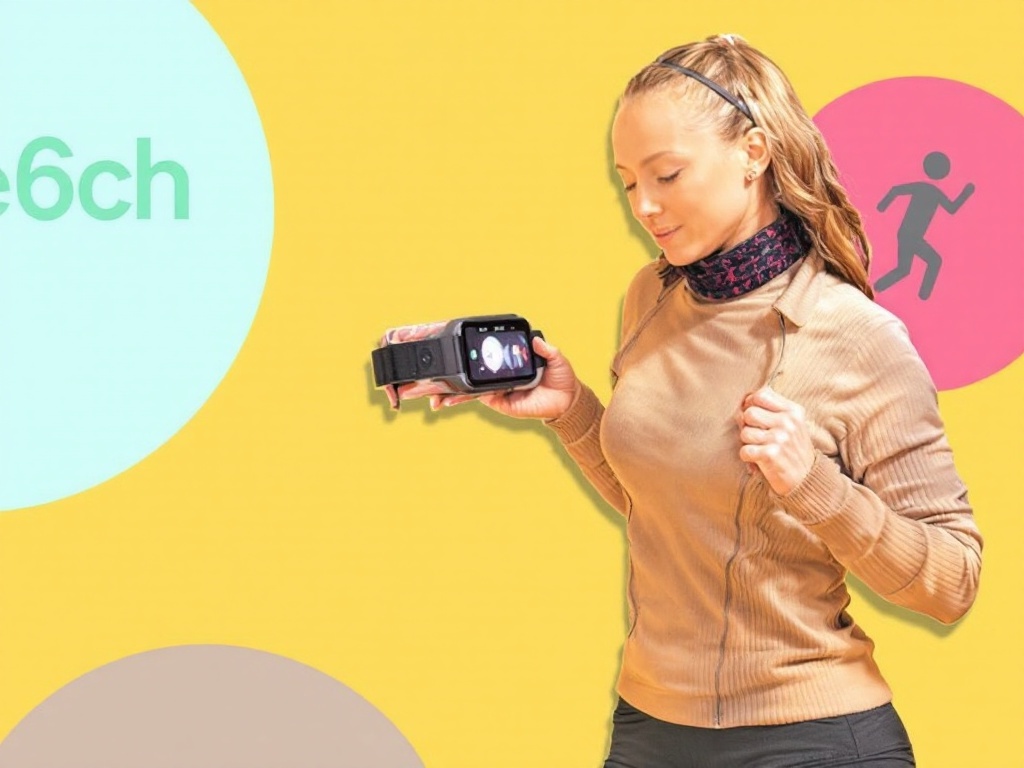
Modern watches can estimate heart rate, steps, distance, workouts and sleep. Some also offer ECG features, blood-oxygen estimates and irregular-rhythm alerts.
For everyday fitness, the most useful functions are often the simplest: reminders to move, heart-rate trends during exercise, walking or running pace and basic activity history.
Heart-rate measurements from well-validated wearables can be reasonably accurate under many conditions, but accuracy can change with movement, skin contact, exercise intensity and device model.
Use watch data to support training decisions, not to ignore symptoms. Chest pain, fainting, severe breathlessness or persistent palpitations need proper medical assessment regardless of what a watch says.
2. Smart rings are becoming more capable—but they are still consumer devices
Smart rings have become popular because finger-based sensors can collect heart rate, heart-rate variability, temperature trends and movement data while being less bulky than a watch.
A recent systematic review of smart rings in clinical medicine found promising accuracy for some measures such as heart rate and sleep-wake detection, while noting that clinical utility beyond certain applications remains less clear.
Another 2026 review of finger-worn sleep devices found stronger performance for sleep-versus-wake classification than for detailed sleep-stage analysis.
So a ring can be useful for patterns, but a “deep sleep” or “readiness” score should not be treated as a laboratory diagnosis.
3. Sleep trackers are good at questions like “am I sleeping less?”
Consumer sleep trackers estimate sleep from movement, heart rate and other signals. Polysomnography in a sleep laboratory measures brain activity and other physiological signals directly.
A meta-analysis comparing consumer wrist-worn trackers with polysomnography found significant differences in several sleep measures, including total sleep time, sleep efficiency and wake after sleep onset.
That does not make the devices useless. They can help identify broad patterns such as shorter sleep on work nights or inconsistent bedtimes.
If you have loud snoring, breathing pauses, choking during sleep or severe daytime sleepiness, do not rely on a wearable score to rule out sleep apnoea.
4. Smart scales are convenient but body-fat estimates are not exact
Many smart scales use bioelectrical impedance analysis to estimate body fat, muscle, water and other body-composition metrics.
These estimates can change with hydration, recent meals, exercise, skin temperature and the algorithm used by the manufacturer.
For most people, the most reliable feature is still body weight. Body-fat percentage may be useful as a rough trend when measured under similar conditions, but a one-day change is not evidence that you gained muscle or lost fat overnight.
BetterCare’s FFMI guide explains why body-composition estimates should be interpreted cautiously.
5. AI coaching can improve structure, but it cannot assess everything
AI-powered fitness apps can generate workouts, adjust training volume, suggest progressions and turn activity data into recommendations.
That can be useful for someone who needs structure. The limitation is context.
An app may not know that pain is getting worse, a movement feels unstable, you have a new medical diagnosis or your technique has changed. It can also produce generic advice that looks personalised because it uses your numbers.
Use AI coaching for planning and organisation. For injury, rehabilitation, complex medical conditions or technically demanding training, qualified human assessment still matters.
6. Connected strength equipment can make progression easier to track
Smart resistance machines and connected home gyms can record load, repetitions, range of motion and training history.
The main value is not that they “hack” muscle growth. It is that they make progressive overload easier to see.
You can achieve the same basic training principle with a notebook and conventional weights. Technology may improve convenience, but it does not replace training fundamentals.
7. VR fitness can make activity more engaging
Virtual-reality fitness turns movement into games, boxing sessions, dance or interactive challenges. For some people, enjoyment can improve consistency.
The calorie number displayed by a VR app should still be treated as an estimate. The more important question is whether the activity raises your heart rate, gets you moving regularly and feels safe in the space you have available.
People with motion sickness, balance problems or certain neurological conditions may need to use VR cautiously.
8. Recovery technology often measures proxies, not recovery itself
Readiness scores typically combine variables such as resting heart rate, heart-rate variability, sleep and recent activity.
These can be useful clues, but “recovery” is not one measurable substance. Nutrition, soreness, stress, illness, training load and motivation also matter.
Do not cancel a planned easy walk because an app gives a low score if you otherwise feel well. Equally, do not force a hard workout because a device says you are “100% recovered” when you feel ill or injured.
9. Massage guns can feel useful without proving faster recovery
Percussive massage devices may temporarily change how muscles feel and can be useful for comfort or warm-up in some people.
They should not be presented as devices that “flush toxins”, repair tissue or dramatically accelerate recovery.
Avoid using them over acute injuries, fractures, areas with reduced sensation or anywhere your clinician has advised against pressure.
10. EMS devices are not replacements for strength training
Electrical muscle stimulation can cause muscles to contract and has legitimate rehabilitation and clinical uses in specific settings.
Consumer EMS products should not be treated as a substitute for regular resistance exercise in healthy adults. Sitting still while a device stimulates the abdominal muscles is not equivalent to a full-body strength programme.
If you have a pacemaker, implanted electronic device or relevant medical condition, get professional advice before using electrical-stimulation products.
11. Posture wearables are reminders, not posture cures
Some sensors vibrate when you slouch or stay in one position for too long.
That can be useful as a cue to move. But there is no single perfect posture that everyone should hold all day.
Changing position, strengthening relevant muscles and adjusting the work environment often matter more than trying to remain rigidly upright.
12. Smart water bottles solve a reminder problem, not dehydration science
Connected bottles can remind you to drink and track refills. They may help people who genuinely forget to drink during long workdays.
They cannot calculate a perfect hydration need from a generic algorithm because needs vary with body size, weather, exercise, illness and diet.
For most ordinary days, thirst, urine colour and sensible access to fluids are more useful than chasing an app target.
13. Blood-oxygen readings have limitations
Some watches and rings estimate peripheral oxygen saturation. These readings can be affected by motion, fit, skin perfusion and device limitations.
Do not use a consumer wearable to rule out respiratory illness. If you are breathless, blue around the lips, confused or seriously unwell, seek urgent medical assessment.
14. Continuous glucose monitors are not general wellness toys
Continuous glucose monitoring is extremely useful for people with diabetes and has transformed diabetes management.
The growing wellness market for people without diabetes can create misleading interpretations of normal glucose responses. A rise after eating carbohydrate is not automatically harmful, and a “flat glucose line” is not a universal health goal.
If you have symptoms or risk factors for diabetes, use recognised testing and clinical advice rather than interpreting a consumer dashboard in isolation.
15. Calorie-burn estimates are among the weakest wearable metrics
Many devices estimate energy expenditure from heart rate, movement, age, weight and proprietary algorithms.
The umbrella review of consumer wearables found substantial variation and error in energy-expenditure estimates.
This matters because people may “eat back” exercise calories based on numbers that are not precise enough for that purpose.
If weight management is your goal, use wearable calorie estimates as rough context rather than an exact food allowance.
16. Data privacy should be part of your buying decision
Fitness devices can collect sensitive information: location, sleep patterns, heart-rate data, reproductive-health information, contacts and behavioural routines.
Before buying, check what data is collected, whether the account requires cloud storage, how long information is retained and whether you can delete or export it.
A feature is not automatically worth using simply because the device can collect it.
How to decide whether fitness tech is worth buying
Ask five questions:
- What behaviour do I want to change? More walking, consistent workouts or better sleep timing are clear goals.
- Which metric actually supports that goal? You may only need steps and workout history, not twenty biomarkers.
- How accurate does the metric need to be? A trend can be useful even when it is not diagnostic.
- Will the device reduce friction or add anxiety? More data is not always better.
- Could a cheaper tool do the same job? A basic pedometer, timer or training log may be enough.
A simple fitness-tech hierarchy
For most people, the most useful order is:
- Use technology to support regular movement.
- Track workouts consistently.
- Use heart-rate trends where relevant.
- Use sleep data for broad patterns.
- Treat recovery, body-fat and calorie-burn scores as estimates.
- Never let a device override concerning symptoms.
Reader questions on Fitness Tech in 2026
Are fitness trackers accurate?
Accuracy depends on the metric and device. Heart rate and step trends often perform better than calorie expenditure, detailed sleep staging and body-composition estimates.
Are smart rings better than watches?
Not universally. Rings can be comfortable for sleep and continuous wear, while watches may be better for workouts and real-time display. Choose based on the job you need the device to do.
Can a smartwatch diagnose a heart problem?
Some devices can detect signals that deserve medical follow-up, but they do not replace clinical diagnosis. Symptoms should be assessed regardless of wearable data.
Are smart scales accurate for body fat?
They can be useful for rough trends but are affected by hydration and algorithm differences. Do not treat a single body-fat reading as exact.
Do recovery scores work?
They can summarise useful signals, but recovery is broader than the variables a device measures. Use the score alongside how you actually feel.
Is expensive fitness tech necessary to get fit?
No. Walking, resistance training and regular activity do not require smart devices. Technology is valuable only when it helps you follow a useful behaviour more consistently.
Using fitness technology without the hype
The best fitness technology in 2026 is not the device with the most sensors. It is the tool that helps you move, train, recover or sleep more consistently without pretending an estimate is a diagnosis.
Wearables can be excellent for trends. Smart rings and watches can provide useful heart-rate and sleep information. Connected equipment can make training logs easier. But calorie burn, body composition, sleep stages and readiness scores should be interpreted with caution.
Buy technology to solve a specific problem, not because a dashboard promises perfect knowledge of your body.
Consumer fitness-tech note: Consumer fitness devices provide estimates and should not replace medical assessment. Seek professional care for concerning symptoms regardless of what a wearable or app reports.
For the wider beginner movement framework, see BetterCare’s Move More pillar guide.