A healthy breakfast does not need to be complicated, expensive or perfectly balanced every morning. It just needs to help you start the day with enough energy and useful nutrients without turning breakfast into a project you cannot sustain.
For most adults, a practical breakfast usually works best when it includes a source of higher-fibre carbohydrate, some protein, and fruit or vegetables where convenient. The NHS Eatwell approach supports balancing meals across the day rather than demanding that every single meal is nutritionally perfect.
This guide focuses on realistic UK breakfast ideas for adults at home, at work, on a budget, or with limited time. It is not a weight-loss plan, and it does not assume everybody needs breakfast. If you are not hungry first thing, a later breakfast or early snack may suit you better.
What makes a breakfast useful?
A practical breakfast often combines three things:
- something starchy or wholegrain for energy;
- a protein source to help make the meal more satisfying;
- fruit or vegetables for fibre, vitamins and variety.
That could be porridge with milk and berries, eggs on wholemeal toast, yoghurt with oats and fruit, or beans on toast with tomatoes.
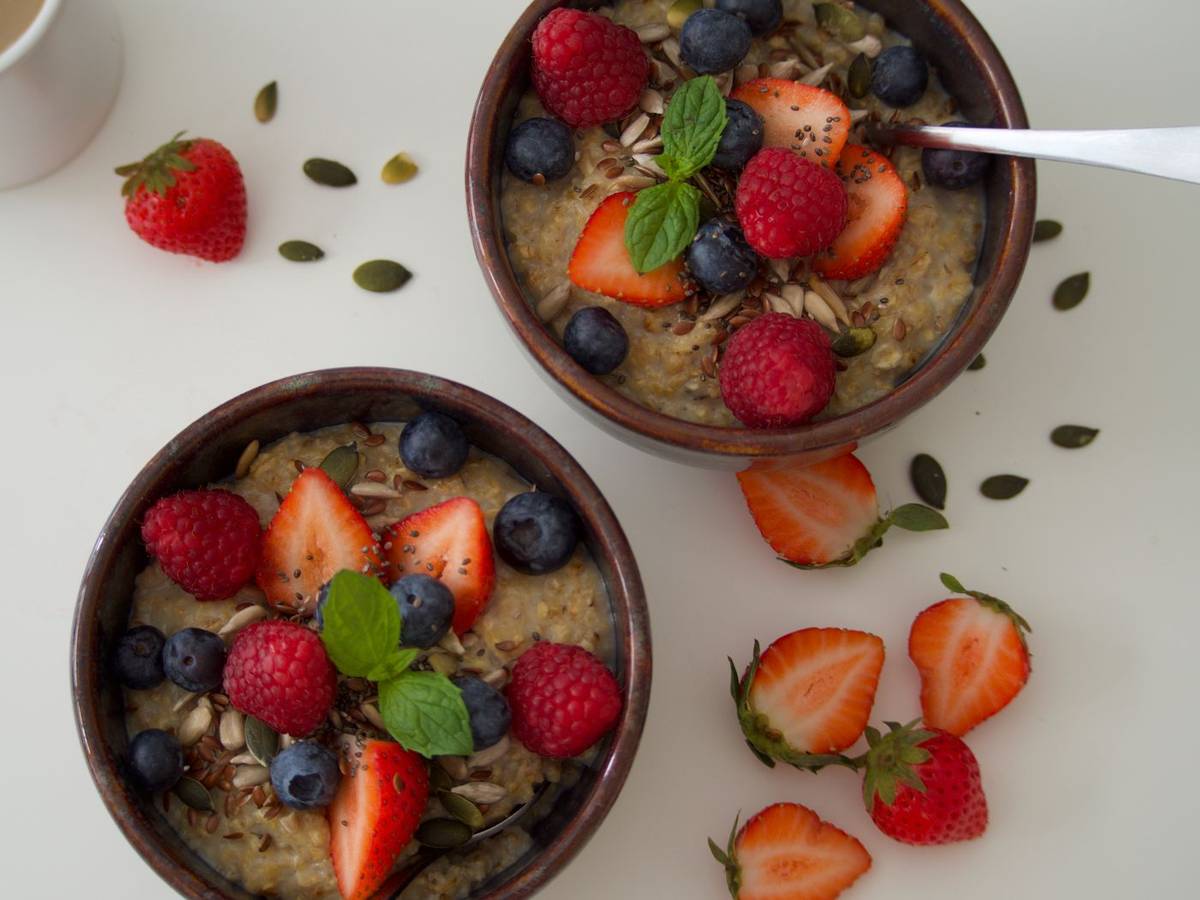
1. Porridge with fruit and seeds
Porridge is inexpensive, easy to customise and naturally contains fibre.
Make it with milk or a fortified plant drink, then add banana, berries, grated apple, seeds or nuts.
If you want more protein, add yoghurt, milk powder or nut butter.
2. Greek-style yoghurt with oats and berries
Use plain Greek-style yoghurt or another yoghurt you enjoy, then add oats, berries and a small amount of nuts or seeds.
This works well when you want breakfast without cooking.
3. Eggs on wholemeal toast
Scrambled, poached or boiled eggs provide protein and work well with wholemeal toast.
Add tomatoes, mushrooms, spinach or avocado if you have time.
4. Beans on toast
Baked beans on wholemeal toast are simple, affordable and provide fibre as well as protein.
If salt is a concern, compare brands or choose lower-salt versions where available.
5. Peanut butter and banana toast
Wholemeal toast with peanut butter and sliced banana is quick, portable and more substantial than plain toast.
It combines carbohydrate, protein and unsaturated fat in a meal that takes only a few minutes.
6. Overnight oats
Mix oats with milk or yoghurt the night before and refrigerate.
Add fruit, seeds, cinnamon or nut butter in the morning.
This is especially useful for people who leave home early.
7. Wholegrain cereal with milk and fruit
Cereal can be a perfectly reasonable breakfast if you choose it carefully.
Compare similar products for fibre and sugar, then add milk and fruit.
BetterCare’s UK food-label guide can help you compare cereals quickly.
8. Avocado and egg toast
Use wholegrain toast, mashed avocado and egg.
This is more energy-dense than some breakfasts, which can be useful if you have a long morning or need a more substantial meal.
9. Cottage cheese with fruit and toast
Cottage cheese provides protein and can be paired with fruit or wholegrain toast.
If you prefer savoury food, add tomatoes, cucumber and pepper.
10. Smoothie plus something to chew
A smoothie can be convenient, but it should not automatically replace all solid breakfast food.
Try milk or yoghurt with fruit and oats, then have toast, oatcakes or a small handful of nuts alongside it.
Remember that smoothies and fruit juice count only once toward 5 A Day, even if several fruits are included.
11. Omelette with vegetables
An omelette is a good way to use leftovers.
Add mushrooms, peppers, spinach, tomatoes, cheese or cooked potato.
Serve with toast if you need more carbohydrate.
12. Breakfast wrap
Fill a wholegrain wrap with egg, beans, spinach, tomato or avocado.
Wrap it in foil if you need something portable.
13. Leftovers can be breakfast
Breakfast does not have to be cereal, toast or eggs.
Leftover rice with egg, soup with bread, a small baked potato, or last night’s vegetables with beans can all work.
If you prefer savoury food in the morning, use that preference rather than forcing “breakfast foods.”
14. Yoghurt and granola
Granola can be useful but is often energy-dense and sometimes high in sugar.
Use a sensible portion with yoghurt and fruit rather than treating the bowl as unlimited.
15. Oatcakes with hummus and tomatoes
Oatcakes store well and can be topped with hummus, tomatoes or cucumber.
This is useful for people who do not enjoy sweet breakfasts.
Breakfast and fibre
Breakfast is one of the easiest meals to improve if your fibre intake is low.
Useful choices include oats, wholemeal bread, higher-fibre cereals, fruit, nuts and seeds.
See BetterCare’s high-fibre foods guide for practical ways to build fibre across the day.
Breakfast and protein
Many adults eat a breakfast that is mostly refined carbohydrate: toast with jam, sugary cereal, or a pastry.
Add protein with eggs, milk, yoghurt, cheese, beans, nut butter, tofu or another suitable option.
You do not need a branded protein product.
Breakfast and 5 A Day
Fruit is the easiest way to add a portion at breakfast.
Banana on porridge, berries with yoghurt, or an apple alongside toast all count.
Vegetables can work too: tomatoes, mushrooms, spinach, peppers or avocado can all fit into savoury breakfasts.
Healthy breakfasts on a budget
Some of the cheapest breakfast foods are also some of the most useful:
- oats;
- eggs;
- wholemeal bread;
- bananas;
- own-brand yoghurt;
- baked beans;
- peanut butter;
- frozen berries;
- milk.
Pre-portioned breakfast pots and branded “healthy” products are often much more expensive than basic ingredients.
Healthy breakfasts when you are short on time
Keep two or three default options.
- banana plus yoghurt and oats;
- wholemeal toast with peanut butter;
- overnight oats;
- boiled eggs with toast;
- wholegrain cereal with milk and fruit.
A repeatable breakfast is more useful than an impressive recipe you only make once.
Breakfast for work
If you eat after arriving at work, choose something easy to transport and store.
Overnight oats, yoghurt and fruit, boiled eggs, oatcakes, wholegrain toast, or a breakfast wrap can work well.
If there is no fridge, use shelf-stable foods and buy chilled items close to when you plan to eat them.
Breakfast when appetite is low
A large breakfast is not necessary if you have a small appetite.
Try a smaller portion with more nutrition: yoghurt with nut butter and banana, a small bowl of porridge made with milk, or one slice of toast with egg and avocado.
If healthy weight gain is the goal, see BetterCare’s high-protein breakfasts for weight gain guide.
Breakfast when trying to maintain weight
Choose a portion that matches your appetite and activity level.
There is no need to eat a huge breakfast because somebody says it is the “most important meal of the day.”
The best pattern is the one that helps you eat well across the whole day.
Do you have to eat breakfast?
No single meal schedule suits everyone.
Some adults feel better eating soon after waking. Others are not hungry until later.
If skipping breakfast leaves you ravenous and reaching for less useful food mid-morning, a simple breakfast may help. If you naturally eat later and still have balanced meals, that may be fine too.
What about coffee for breakfast?
Coffee can be part of breakfast, but coffee alone is not a meal.
If you rely on caffeine because you are too rushed to eat, prepare something portable the night before.
What about pastries?
Croissants, pastries and sweet baked goods can fit occasionally, but they are usually lower in fibre and protein than options such as oats, eggs, yoghurt or wholemeal toast.
If you enjoy them, pair them with fruit or yoghurt rather than treating them as forbidden.
What about breakfast bars?
Breakfast bars are convenient, but the name does not guarantee a balanced meal.
Compare sugar, fibre and protein. If the bar is small, pair it with yoghurt, milk or fruit.
What about fruit juice?
Fruit juice can count as one 5 A Day portion, but NHS guidance recommends limiting juice and smoothies to a combined 150ml per day.
Whole fruit is usually a better everyday option because it provides more intact fibre and is easier to portion naturally.
How to improve the breakfast you already eat
You do not need a completely new menu.
- If you eat toast, switch to wholemeal and add egg or peanut butter.
- If you eat cereal, choose a higher-fibre option and add fruit.
- If you eat yoghurt, add oats, fruit and nuts.
- If you eat porridge, make it with milk and add seeds or nut butter.
Breakfast for people who dislike sweet food
There is no reason to force fruit-heavy or sweet breakfasts if you prefer savoury food. Eggs, beans, hummus, avocado, tomatoes, mushrooms, leftover vegetables, cheese and wholegrain toast can all work.
A savoury breakfast can still include fibre and protein without relying on cereal or yoghurt.
Breakfast when you have very little appetite in the morning
If food feels unappealing immediately after waking, start smaller rather than skipping food all day. A yoghurt, banana with peanut butter, milky drink, or half a slice of toast with egg may be easier.
You can then have a second small breakfast or snack later in the morning.
Breakfast after exercise
If you exercise in the morning, breakfast can help replace energy and provide protein. You do not need a specialist recovery product for most everyday activity.
Examples include eggs and toast, yoghurt with oats and fruit, or porridge with milk and nuts.
Breakfast for adults over 50
As people get older, appetite can change and maintaining muscle becomes more important. A breakfast with protein can be useful: eggs, yoghurt, milk, beans, cheese or tofu are all practical choices.
If weight loss or low appetite is becoming a problem, a more energy-dense breakfast may be appropriate rather than a very low-calorie one.
A five-day practical breakfast rotation
- Monday: porridge with banana and seeds.
- Tuesday: eggs on wholemeal toast with tomatoes.
- Wednesday: yoghurt with oats, berries and nuts.
- Thursday: beans on toast with spinach.
- Friday: overnight oats with fruit and peanut butter.
Repeat favourites at the weekend or use leftovers.
Breakfast does not need to be perfect
A useful breakfast supports the rest of your day. It does not need to contain every food group or meet a social-media standard.
Choose something realistic, include fibre and protein where you can, add fruit or vegetables regularly, and keep a few easy options available for busy mornings.
For the wider BetterCare approach to balanced meals, food labels, fibre and everyday eating, return to the Everyday Nutrition pillar.
Reviewed: September 2026. General UK nutrition information; individual dietary needs vary.