“5 A Day” sounds simple, but the details are easy to misunderstand. Does a smoothie count as several portions? Do baked beans count? What about potatoes, dried fruit, frozen vegetables or tomato purée? And what does an 80g portion actually look like on a normal plate?
The NHS recommendation is to eat at least five portions of a variety of fruit and vegetables each day. For adults, one portion is generally 80g of fresh, frozen or tinned fruit or vegetables. Dried fruit has a smaller portion of 30g, and fruit juice, vegetable juice and smoothies are limited to a combined 150ml if they are to count as one portion.
The official NHS 5 A Day guidance also explains that variety matters. Five portions of the same fruit are not the same as eating a range of fruit and vegetables across the day.
What counts as one adult portion?
For most fresh, frozen or tinned fruit and vegetables, one adult portion is around 80g.
- one medium apple, banana, orange or pear;
- two smaller fruits such as satsumas or plums;
- a slice of melon or pineapple;
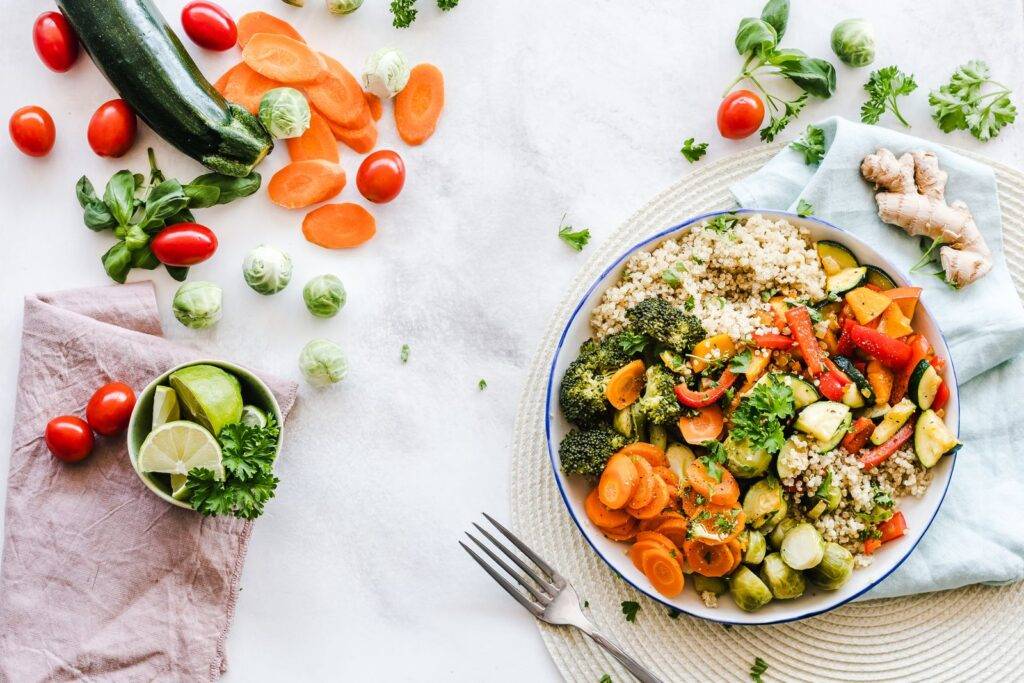
- around three heaped tablespoons of cooked vegetables;
- around three heaped tablespoons of beans or pulses;
- a bowl or side portion of salad that adds up to roughly 80g.
You do not need to weigh every apple. The 80g figure is mainly useful for understanding the scale of a portion and for foods where the amount is less obvious.
Fresh, frozen and tinned all count
Fresh produce is the version most people think of first, but frozen and tinned fruit and vegetables count too. Frozen peas, spinach, broccoli, mixed vegetables and berries are convenient and reduce waste.
For tinned vegetables, choose options in water without lots of added salt where possible. For tinned fruit, choose fruit in natural juice or water rather than syrup.
Our grocery shopping for one guide explains how frozen and shelf-stable foods can reduce waste.
Dried fruit counts, but the portion is smaller
Dried fruit is concentrated, so 30g counts as one portion. Examples include raisins, sultanas, dates, dried apricots and dried figs.
The NHS advises eating dried fruit at mealtimes rather than repeatedly between meals because it can stick to teeth and contribute to tooth decay.
Fruit juice counts only once
Unsweetened 100% fruit juice, vegetable juice and smoothies can count toward 5 A Day, but only up to a combined 150ml per day.
Drinking more does not create extra portions. Two glasses of juice and a smoothie still count as only one portion.
This is because juicing and blending releases sugars from the structure of the fruit. The NHS recommends keeping the total to 150ml and having it with meals to reduce the impact on teeth.
Smoothies are not a shortcut to five portions
A large smoothie can contain several fruits, but the NHS recommendation still limits juice and smoothies to one portion toward 5 A Day.
Whole fruit is generally a better routine choice because it retains the structure that helps with fibre and makes it less easy to consume large amounts of sugar quickly.
Beans and pulses count, but only once
Beans, lentils, chickpeas and other pulses count as one portion of your 5 A Day even if you eat more than 80g.
They are nutritionally valuable because they provide fibre and protein, but the NHS counts them as a maximum of one portion because they do not provide the same range of nutrients as other fruit and vegetables.
Potatoes do not count
Ordinary potatoes are treated as a starchy food rather than a vegetable portion in the 5 A Day system.
That does not mean potatoes are unhealthy. They provide carbohydrate, potassium and fibre, especially when the skin is eaten. They simply sit in the same part of the meal as bread, rice or pasta.
Sweet potatoes do count
Sweet potatoes, parsnips, swede and turnips count because they are usually eaten as vegetables alongside the main starchy part of the meal.
Tomato purée and prepared foods can contribute
Concentrated tomato products can contribute. NHS guidance gives one heaped tablespoon of tomato purée as an example.
Fruit and vegetables inside ready meals, soups, sauces and other prepared foods can also count, but the overall product may still be high in salt, sugar or saturated fat.
Use BetterCare’s UK food-label guide to judge the whole product.
What about onions, garlic and herbs?
Onions, leeks, shallots and garlic can contribute toward your overall fruit and vegetable intake. The amount used in one meal is often small, so they may not provide a full 80g portion by themselves.
That does not make them unimportant. They add flavour and variety and can help vegetables feel less repetitive.
What about avocado?
Avocado is a fruit and can count toward 5 A Day. It is also more energy-dense than many other fruits because it contains unsaturated fat.
This can be useful for people who need more calories, although portion size still matters in the context of the whole diet.
Does salad count?
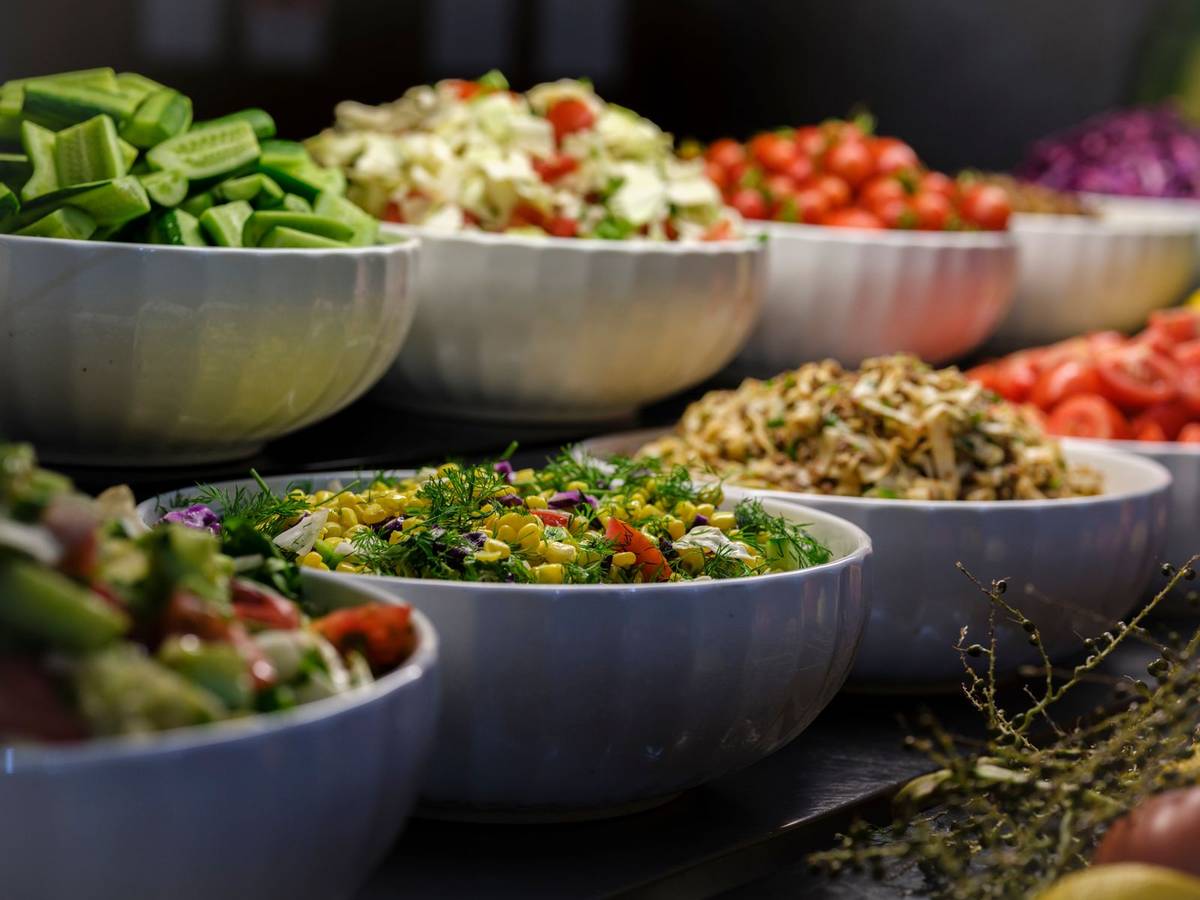
Yes. Lettuce, tomatoes, cucumber, peppers, carrots, beetroot and other salad vegetables can contribute.
The common problem is portion size. Two thin slices of cucumber and one lettuce leaf are not a full portion.
Build a more substantial side salad or combine several vegetables to reach a useful amount.
Five portions does not mean five separate meals
You can combine portions within meals. A vegetable curry might contain enough peppers and spinach for one portion and chickpeas for another. A breakfast might include berries in porridge plus a banana later.
The aim is five portions across the day, not five formal eating occasions.
A realistic one-day example
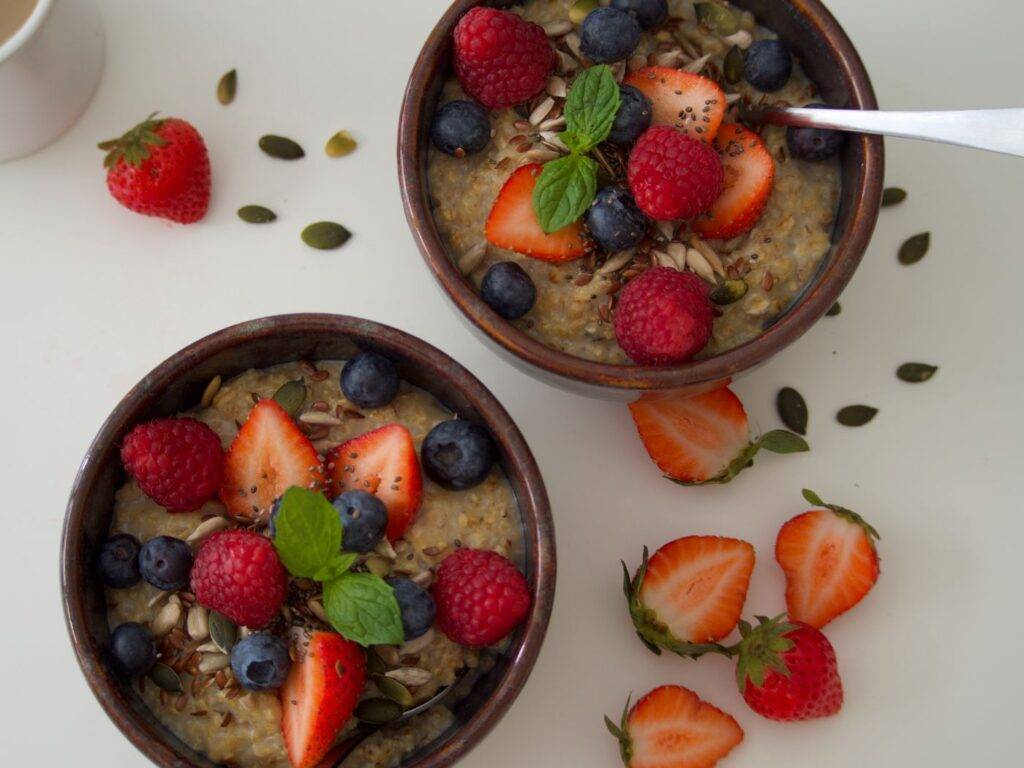
- Breakfast: porridge with berries — 1 portion.
- Mid-morning: banana — 1 portion.
- Lunch: wholemeal sandwich with substantial salad filling — 1 portion.
- Dinner: carrots and broccoli — 2 portions.
That reaches five without needing juice, smoothies or complicated recipes.
Another example for someone who prefers cooked food
- Breakfast: banana with cereal — 1 portion.
- Lunch: lentil soup — pulses count as 1 portion.
- Snack: two satsumas — 1 portion.
- Dinner: peas and roasted carrots — 2 portions.
Again, the meals are ordinary and the vegetables do not need to be raw.
5 A Day on a budget
Fresh berries and pre-cut fruit are not required. Budget-friendly options include bananas, carrots, cabbage, frozen peas, frozen mixed vegetables, tinned tomatoes, tinned beans, apples in larger bags, seasonal produce and own-brand frozen fruit.
Use what is affordable and reduce waste rather than assuming expensive produce is more nutritious.
5 A Day when cooking for one
Single-person households often struggle with produce spoiling before it is used.
Choose a mix of fresh, frozen and tinned options. Buy a few fresh foods you know you will eat, then use frozen vegetables and tinned tomatoes or beans as backup.
Our meal planning for one guide can help organise this without buying too much.
5 A Day when appetite is small
If you are trying to gain weight and have a small appetite, five very large bowls of vegetables can make it harder to eat enough calories.
Use smaller portions across the day and combine fruit or vegetables with more energy-dense foods.
Examples include banana with yoghurt and nut butter, avocado on toast, vegetables with cheese sauce, or fruit with custard.
What does not count?
Foods that contain only tiny amounts of fruit or vegetables do not suddenly become a full portion. Ketchup, fruit-flavoured sweets and snack bars with a little dried fruit should not be treated as equivalent to an 80g portion.
Nuts and seeds are nutritious but do not count toward 5 A Day. They sit elsewhere in a balanced diet and can still contribute useful protein, fibre and unsaturated fats.
How to build portions into breakfast, lunch and dinner
A practical way to reach five is to stop thinking of fruit and vegetables as something that must be eaten separately. Put berries or banana into breakfast, add salad or vegetable soup to lunch, and include two vegetables at dinner.
This makes the target easier than trying to remember five isolated snacks.
For example, breakfast berries plus a banana later gives two portions; a substantial salad at lunch gives another; peas and carrots with dinner complete the five.
5 A Day and fibre work together
Fruit and vegetables can help with fibre intake, but they are not the only source. Wholegrains, beans, lentils, nuts and seeds also matter.
If fibre is one of your goals, use our high-fibre foods guide to build it across the whole day rather than relying on fruit alone.
Do not turn 5 A Day into a reason to fear food
The recommendation is a useful public-health target, not a test you pass or fail at every meal. A balanced diet still needs protein foods, starchy carbohydrates, dairy or alternatives and appropriate fats.
If you reach four portions one day and six another, focus on the overall pattern rather than chasing a perfect number.
Fruit and vegetables are not interchangeable with supplements
A vitamin tablet does not count as a 5 A Day portion.
Fruit and vegetables provide fibre and a complex mix of nutrients and plant compounds that supplements do not reproduce in the same way.
Variety matters more than perfection
Try to rotate colours and types across the week rather than eating the same five items every day.
You do not need a rainbow at every meal. Variety builds over time.
Children have different portion sizes
Children are also encouraged to eat a variety of fruit and vegetables, but their portion sizes are smaller.
The NHS uses the child’s palm as a rough guide for one portion. This article focuses on adult portions, so do not use the 80g adult rule rigidly for young children.
What if you miss five portions on one day?
Do not treat one low-fruit-and-vegetable day as failure.
Return to your normal pattern at the next meal. A healthy diet is built over weeks and months, not by achieving a perfect score every day.
A simple way to remember the rules
- 80g fresh, frozen or tinned fruit or vegetables = 1 portion.
- 30g dried fruit = 1 portion.
- 150ml juice or smoothie = maximum 1 portion per day.
- Beans and pulses = maximum 1 portion per day.
- Ordinary potatoes do not count.
- Sweet potatoes and many other root vegetables do count.
- Frozen and tinned are valid choices.
- Variety matters.
Think in portions, not in rules you have to memorise
The point of 5 A Day is not to turn eating into arithmetic. It is a practical reminder to include a useful amount and variety of fruit and vegetables across the day.
Use fresh, frozen, tinned and dried options, keep juice limited, and build portions into meals you already enjoy.
For the wider BetterCare approach to balanced meals, fibre, food labels and everyday nutrition, return to the Everyday Nutrition pillar.
Reviewed: September 2026. General UK nutrition information based on current NHS 5 A Day guidance.