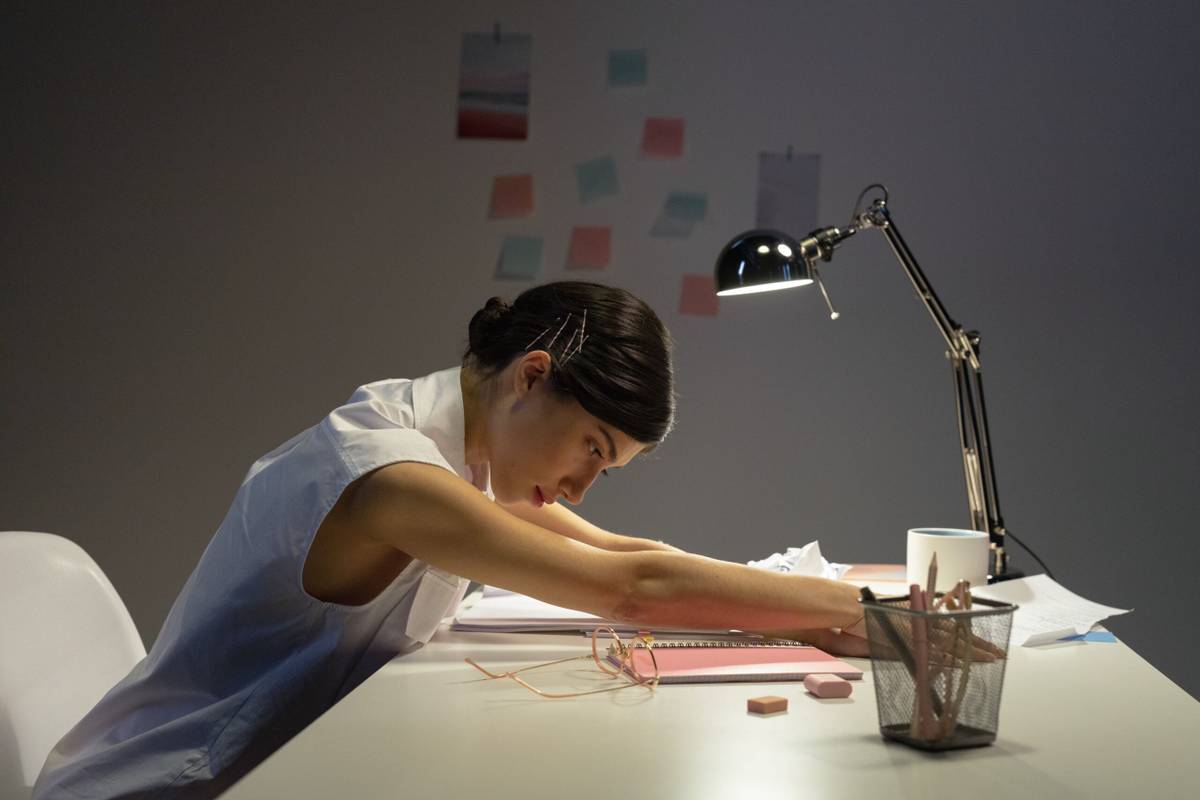
Long periods at a desk can leave your neck, shoulders, back, hips and legs feeling stiff even when nothing is actually “wrong” with those areas. The most useful response is usually not an elaborate stretching routine. It is to interrupt sitting regularly, change position, move through comfortable ranges and make activity part of the working day.
The NHS advises adults to reduce time spent sitting or lying down and to break up long periods of inactivity with some movement. Its physical activity guidelines for adults also recommend regular aerobic activity and muscle-strengthening work across the week.
If you want to turn those movement breaks into structured strength work, use BetterCare’s beginner home strength workout or the beginner resistance-band routine.
This guide gives simple desk-friendly stretches and movement breaks for generally healthy adults. They are not treatments for an injury, trapped nerve or persistent pain condition. For a routine outside working hours, see the morning stretching routine or evening stretching routine.
First: the best “desk stretch” is often standing up
If you have been sitting still for an hour, another seated stretch may help briefly, but changing position is usually more valuable. Stand, walk to get water, take a short corridor lap, use the stairs, or simply work standing for a few minutes if your setup allows it.
The NHS Better Health advice on how to be more active suggests using reminders to get up and move during the day. You do not need to wait until you feel stiff.
How often should you move?
There is no magic desk-break interval that suits everyone. A practical starting point is to avoid remaining in exactly the same position for long uninterrupted periods. Some people use a reminder every 30 to 60 minutes; others link movement to natural work events such as finishing a call, sending a report or refilling a drink.
The goal is not to create another rigid rule. It is to make movement frequent enough that sitting does not dominate the entire day.
1. Shoulder rolls
Sit or stand tall without forcing your chest up. Slowly roll both shoulders backwards in a comfortable circle several times, then reverse direction. Keep the movement easy rather than trying to make the biggest possible circle.
This is a useful reset after typing, mouse work or phone use because many people gradually tense their shoulders without noticing.
2. Gentle neck turn
Face forward, keep your shoulders relaxed and slowly turn your head to look over one shoulder. Stop where the movement feels comfortable, return to centre, then repeat to the other side.
Do not force the end range or pull your head with your hand. If turning your neck produces dizziness, arm symptoms or sharp pain, stop and seek appropriate advice.
3. Side neck stretch
Keep one shoulder relaxed and gently tilt your head so one ear moves towards the same-side shoulder. You should feel a mild stretch on the opposite side of the neck. Hold briefly, return to centre and switch sides.
A stretch should feel like tension, not pain. Stronger is not automatically better.
4. Chest opener
Stand or sit away from the chair back. Let your arms rest by your sides, then gently draw your shoulders back and down while opening your chest. If comfortable, place your hands behind you and lightly straighten your elbows without forcing them.
The NHS also includes a seated chest stretch in its gentle sitting exercise guide.
5. Upper-back reach
Clasp your hands in front of you at chest height, soften your elbows and gently reach forward while allowing your upper back to round slightly. Keep breathing normally.
This can feel useful after periods of sitting upright and working with the arms close to the body.
6. Wrist flexor stretch
Extend one arm in front with the palm facing up. With the other hand, gently guide the fingers down until you feel a mild stretch through the underside of the forearm. Keep the elbow comfortable rather than locked hard.
Repeat on the other side. Do not stretch into tingling or numbness.
7. Wrist extensor stretch
Extend one arm with the palm facing down. Gently guide the hand down so the fingers point towards the floor. You may feel a stretch along the top of the forearm.
People who type all day often benefit more from changing hand position, reducing unnecessary grip force and taking breaks than from aggressive wrist stretching.
8. Seated trunk rotation
Sit with both feet on the floor. Turn your upper body gently to one side while keeping the movement comfortable and controlled. Return to centre and repeat the other way.
Avoid using the chair to wrench yourself deeper into the movement. Small, easy rotation is enough.
9. Seated ankle pumps
Keeping your heels or feet supported, alternately point and flex your ankles. You can also circle the ankles slowly in both directions.
This is simple movement for the lower legs during long meetings or travel, although it does not replace getting up and walking when you can.
10. Seated knee extension
Sit tall and slowly straighten one knee until the leg is comfortably extended, then lower it. Repeat on the other side. Keep the movement controlled.
This adds a small amount of muscle activity to a seated break rather than relying only on passive stretching.
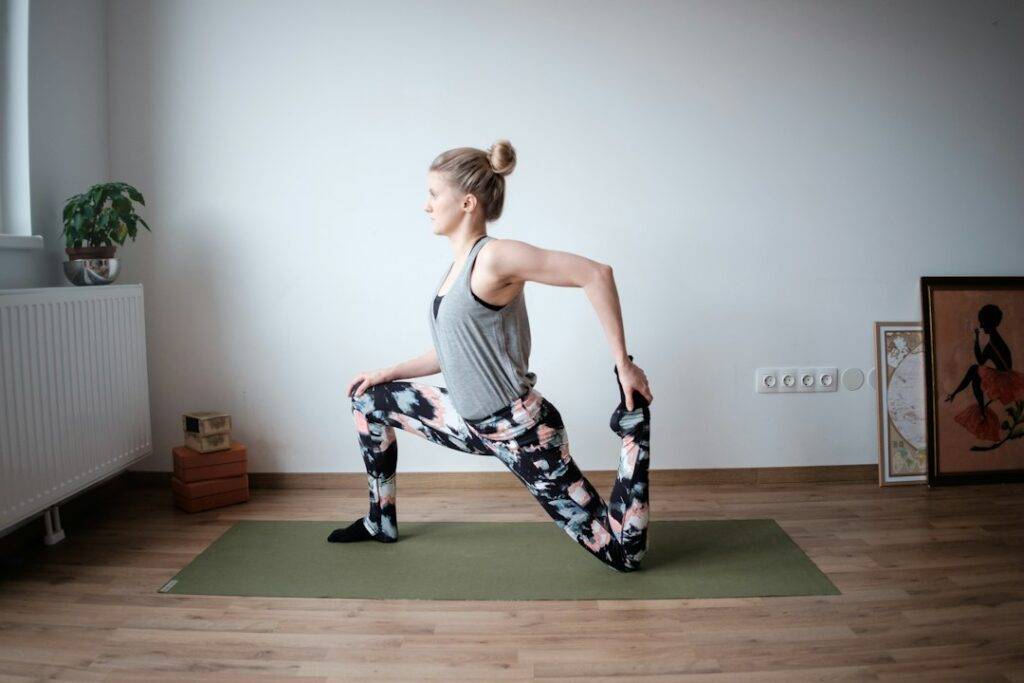
11. Hip flexor stretch
Stand in a split stance with one foot forward and one back. Keep your torso upright and gently shift your weight forward until you feel a stretch at the front of the hip on the back-leg side.
Keep the movement small and avoid arching your lower back to manufacture a stronger stretch.
12. Calf stretch at the desk or wall
Place your hands lightly on a wall or sturdy desk, step one foot back and keep that heel on the floor. Bend the front knee slightly until you feel a stretch in the back calf. Switch sides.
This is useful after long periods with the knees bent and feet tucked under a chair.
13. Standing side reach
Stand with feet comfortably apart. Reach one arm overhead and lean very slightly to the opposite side without twisting. Return to centre and repeat.
Keep the movement easy if you feel unsteady; you can hold a stable surface with the other hand.
14. Sit-to-stand
From a stable chair, place your feet comfortably under you, lean forward slightly and stand up. Sit down with control. Repeat a few times if comfortable.
This is not technically a stretch, but it is a practical way to use the legs and hips during a desk break.
15. One-minute walk
Walk to the farthest printer, take a lap around the office, walk to the kitchen and back, or simply march gently on the spot. Short movement breaks count as movement and can make the day feel less sedentary.
If you want a more structured progression outside work, use our 6-week walking plan for beginners.
A five-minute desk reset
Try this simple sequence: stand and walk for one minute; do shoulder rolls and gentle neck turns for one minute; perform chest and upper-back stretches for one minute; do sit-to-stands or slow marching for one minute; finish with calf and hip stretches for one minute.
You do not have to complete every movement every time. The purpose is to change position and get your body moving again.
Should you hold stretches for 30 seconds?
You can hold a comfortable stretch briefly or for longer if it feels good, but there is no need to chase a specific number during every work break. For desk workers, frequency and regular position changes may matter more than turning each break into a formal flexibility session.
If your goal is to improve flexibility rather than simply break up sitting, use a separate structured flexibility routine.
What about posture?
There is no single perfect sitting position that you must maintain all day. Even a textbook posture can become uncomfortable if you hold it for hours. Aim for a setup that lets you work without obvious strain, then change position regularly.
Adjust chair height, screen position and keyboard or mouse placement so you are not constantly reaching or twisting. If your employer has an occupational health or display-screen assessment process, use it when needed.
Standing desks are not a complete solution
Standing all day can also become uncomfortable. A sit-stand desk is most useful when it helps you vary posture rather than replacing eight hours of sitting with eight hours of standing.
Alternate between sitting, standing and walking. Movement variety is the useful part.
Desk stretches do not replace weekly exercise
Short workday breaks reduce uninterrupted sitting, but they do not replace broader physical activity. NHS guidance recommends at least 150 minutes of moderate activity a week or 75 minutes of vigorous activity for most adults, plus strengthening activities on at least two days.
If walking feels like the easiest starting point, our beginner walking plan gives a gradual structure. If you prefer gentler mind-body activity, read our guide to Tai Chi, Qigong and Chinese martial arts.
When not to push through
Stop if a movement causes sharp pain, worsening numbness or tingling, dizziness, chest pain, unusual shortness of breath or a feeling that you may faint. Seek urgent medical help for serious symptoms.
If you have persistent neck, shoulder, arm, back or leg symptoms, repeated headaches linked to work, or pain that does not improve with ordinary movement and rest, speak to an appropriate healthcare professional rather than repeatedly stretching harder.
Build movement into the job instead of relying on motivation
Put water further from your desk. Take phone calls standing when practical. Walk to a colleague rather than messaging when appropriate. Use stairs for one floor. Schedule a short walking meeting. Place a movement reminder on your calendar. Keep resistance bands or a small reminder card visible if that helps.
The NHS emphasises that every minute counts and that beginners can start gradually. Small changes are worthwhile because they are easier to repeat.
A realistic desk-movement rule
Choose one trigger you encounter many times a day, such as ending a meeting or finishing a focused work block. Each time it happens, stand up and move for one or two minutes. Add a longer walk at lunch when possible.
A simple repeatable habit is usually more useful than an ambitious routine you abandon after three days.
Reviewed: September 2026. General movement information for adults; not individual physiotherapy advice.