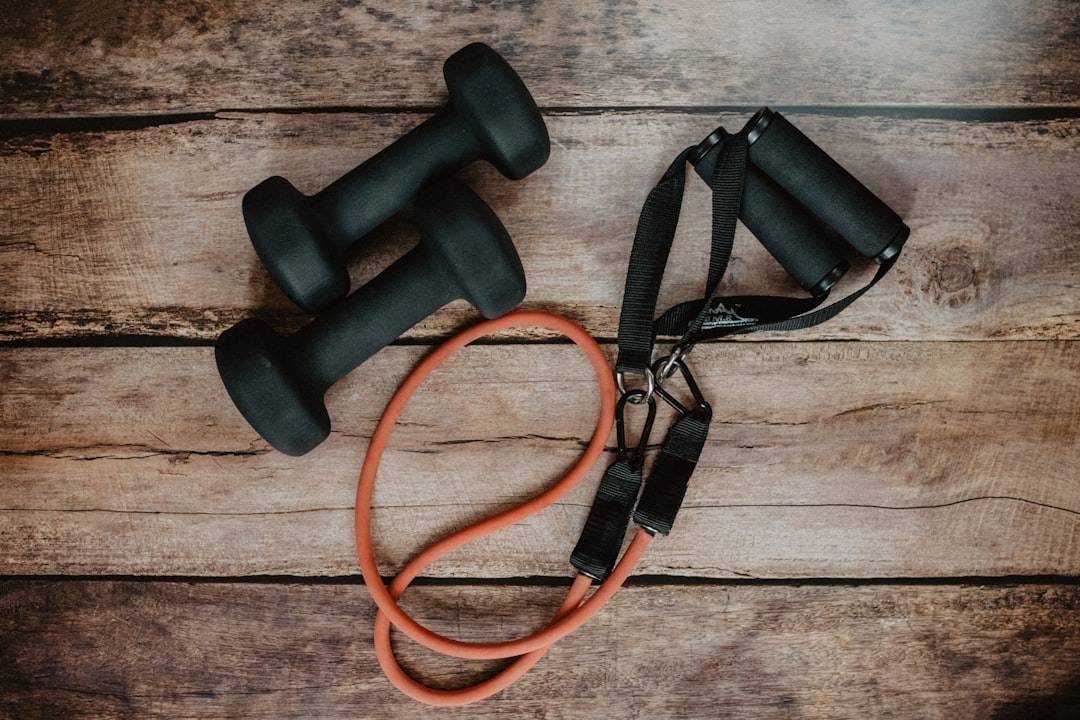
Resistance bands are a simple way to add strength work at home without needing a rack of weights. They are light, easy to store and can make everyday movements such as pushing, pulling, squatting and standing more challenging.
The NHS includes working with resistance bands among examples of muscle-strengthening activity. Its wider guidance recommends strengthening all the major muscle groups on at least two days each week.
This routine is for beginners in generally stable health. It is not designed to treat an injury, replace rehabilitation, or override advice you have been given for a medical condition.
What kind of resistance band should a beginner use?
You do not need the strongest band. A light or medium band is usually more useful when learning the movements because you can focus on control and full comfortable range rather than fighting the resistance.
Loop bands are useful for lower-body work. Long flat bands or tube-style bands with handles are convenient for rows, presses and arm exercises. Whatever style you use, check it for cracks, tears or worn areas before each session.
How resistance bands make exercise harder
A band creates tension as it stretches. The further it stretches, the more resistance you usually feel. That means the effort can change through the movement.
Beginners should start with enough slack that the exercise feels controlled. You can make an exercise harder later by using a stronger band, shortening the band, increasing repetitions or moving more slowly.
Safety before your first session
- Inspect the band for damage.
- Anchor it only to something stable if the exercise requires an anchor.
- Do not attach a band to lightweight furniture that could move.
- Keep the band away from your face when it is heavily stretched.
- Wear shoes with good grip for standing exercises.
- Stop if you feel sharp pain, sudden weakness, dizziness or become unwell.
If you are unsure whether resistance exercise is suitable because of a recent operation, injury, joint problem or health condition, seek individual advice before starting.
A simple full-body resistance-band workout
Start with one set of each exercise. Aim for controlled repetitions rather than a fixed number at all costs. For many beginners, 6 to 10 repetitions is enough to learn the movement.
1. Seated band row
Sit upright on a solid chair with your feet flat. Loop a long band around your feet and hold one end in each hand. Start with your arms extended, then pull your elbows back while keeping your shoulders relaxed. Slowly return.
You should feel the muscles around the upper back and arms working. Avoid jerking the band.
2. Band chest press
Wrap a long band around your upper back and hold an end in each hand. Press your hands forward, then return slowly. Keep the band positioned comfortably across your back rather than your neck.
If the band slides or the movement feels awkward, skip it and use a wall press-up instead.
3. Seated biceps curl
Sit on the middle of a long band or secure it under both feet. Hold the ends with your palms facing forward. Bend your elbows to bring your hands towards your shoulders, then lower slowly.
Keep your elbows fairly close to your sides rather than swinging the arms.
4. Band pull-apart
Hold a light band in front of you at chest height with your hands wider than shoulder-width. Keeping the elbows soft, gently pull your hands apart until you feel the upper back working, then return with control.
Use a light band. This movement should not require straining.
5. Sit-to-stand with a loop band
Place a loop band above your knees and sit on a stable chair. Keep your knees tracking over your feet as you stand, then sit back down slowly.
If adding the band makes the movement less controlled, remove it and practise an ordinary sit-to-stand first. BetterCare’s chair-exercise routine for beginners includes a simpler progression.
6. Standing side step
Place a loop band above the knees or around the lower legs if appropriate. Stand tall with support nearby. Take a small step to one side, bring the other foot across, then repeat.
Use small steps and keep the movement controlled. A lighter band is usually better while learning.
7. Standing hip extension
With a loop band around the legs, hold a chair for support and move one leg gently backwards without arching your back. Return slowly and repeat on the other side.
The range can be small. The aim is to work the hip muscles, not swing the leg.
8. Band overhead press
Stand on a long band or sit with it secured under your feet. Hold the ends at shoulder level and press upward only through a comfortable range. Lower slowly.
If overhead movement bothers your shoulders or you have been advised to avoid it, leave this exercise out.
How many repetitions should a beginner do?
The NHS strength-and-flexibility guidance describes 8 to 12 repetitions as a common strength-training range and suggests at least two sets for muscle-strengthening activities, while also emphasising gradual progression.
A true beginner does not need to start there immediately. Learning one set of 6 to 10 controlled repetitions can be sensible. Once the movements feel familiar, build towards more repetitions or another set.
How hard should the band feel?
The last few repetitions should feel more difficult than the first, but you should still be able to maintain good control. If you have to hold your breath, twist your body or snap the band through the movement, the resistance is probably too high.
A lighter band used well is more useful than a heavy band used badly.
How often should you use resistance bands?
For general health, NHS guidance recommends muscle-strengthening work on at least two days a week. You do not need to train the same muscles hard every day.
A beginner could use a band routine on Monday and Thursday, walk or do gentle activity on other days, and add a short mobility session between them.
Resistance bands and walking work well together
Walking develops aerobic activity and lower-body endurance, while resistance bands can provide more deliberate strength work. BetterCare’s walking plan for beginners can provide the aerobic side of a simple weekly routine.
If 20 to 30 minutes feels too much, the 10-minute low-impact workout offers another short option.
What if you do not own bands yet?
You can start strength training without them. Sit-to-stands, wall press-ups, calf raises and controlled body-weight movements are useful. The NHS publishes gentle strength exercises for home that include several equipment-free options.
A band is a tool, not a requirement.
How to progress safely
Change one variable at a time. You might add two repetitions, add a second set, slow the lowering phase, or move to the next band strength. Avoid increasing all of these in the same session.
Give yourself time to learn how each band behaves. Different brands can feel very different even when they use similar colour labels.
Do band colours mean the same thing?
No. There is no universal colour system across manufacturers. A red band from one brand may be much lighter or heavier than a red band from another.
Use the manufacturer’s resistance information where available, but ultimately judge the band by whether you can complete the movement with control.
What if gripping the band is difficult?
Some people find thin bands uncomfortable to hold. Bands with handles may be easier. You can also avoid wrapping a band tightly around your hands because that can create unnecessary pressure.
If grip weakness is new, one-sided or significant, do not treat it simply as a fitness problem; seek appropriate assessment.
What if your shoulders or knees hurt?
Pain is not a requirement for progress. Reduce the range, use a lighter band, change the exercise or stop. General muscle effort is different from sharp, catching or worsening joint pain.
If pain persists, affects normal activity or follows an injury, get individual advice rather than continuing to modify the routine indefinitely.
A beginner two-day strength plan
Day 1: seated row, sit-to-stand, biceps curl, side step and calf raise.
Day 2: chest press or wall press-up, hip extension, band pull-apart, sit-to-stand and a light overhead press if suitable.
Keep at least a day between sessions at first if the muscles feel tired.
How resistance bands fit the weekly activity guidelines
The NHS physical activity guidelines for adults recommend both aerobic activity and strengthening work. Strength sessions do not simply replace all walking, cycling or other aerobic movement.
A balanced beginner week can include both: some walking or other moderate activity, plus two short strength sessions.
When a beginner strength routine is a better starting point
If using bands feels fiddly, begin with simple body-weight work. BetterCare’s beginner home strength workout uses ordinary household space and can be completed without specialist equipment.
The main goal: learn the movements before chasing resistance
Resistance bands are effective because they make simple movements progressively harder. The best beginner approach is to use a light enough band that you can learn the exercise, control both directions and stop before your form breaks down.
Build consistency first. Strength develops over weeks and months, not from choosing the strongest band on day one.
Reviewed: September 2026. General UK fitness information for beginners; not personalised rehabilitation or medical advice.