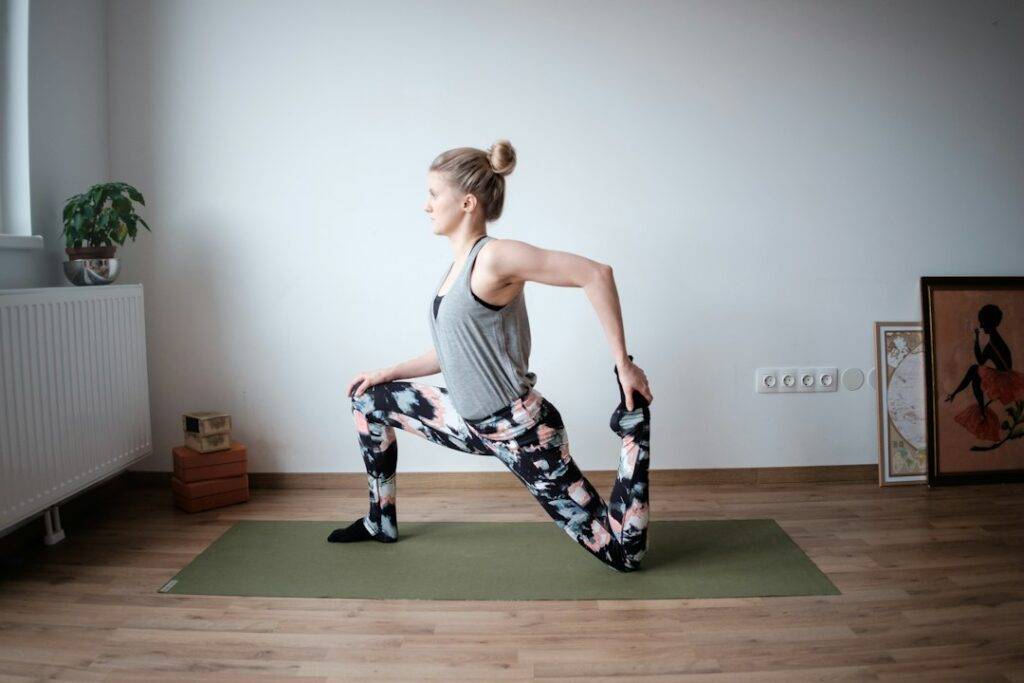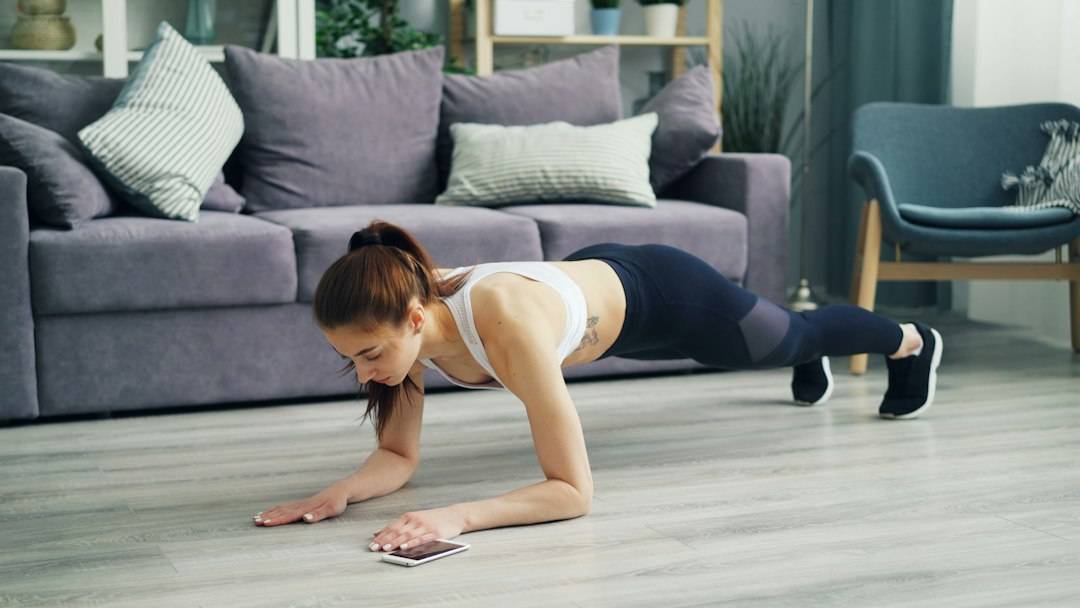
You do not need a gym membership or a room full of equipment to start building strength. A simple home routine using your body weight, a wall and a chair can be enough to begin learning the basic movement patterns.
The NHS recommends muscle-strengthening activity for all the major muscle groups on at least two days each week. Its home strength exercises include movements such as sit-to-stands, mini-squats, calf raises and wall press-ups.
This guide turns those principles into a straightforward beginner routine. It is general fitness information, not a rehabilitation plan or treatment for pain, injury or a medical condition.
What counts as strength exercise?
Strength exercise makes your muscles work harder than they do during normal easy activity. That can involve your body weight, resistance bands, dumbbells, machines or everyday tasks that require effort.
The NHS also notes that strength work can include activities such as carrying heavy shopping, yoga, climbing stairs, gardening and working with resistance bands.
What equipment do you need?
For this routine, very little:
- a stable chair without wheels;
- a clear wall;
- comfortable clothing;
- supportive footwear;
- optional light weights or filled water bottles later.
Clear the floor first so you are not stepping around bags, cables or loose rugs.
How hard should a beginner work?
You should feel your muscles working, especially near the end of a set, but you should still be able to control the movement. If you have to rush, hold your breath, twist your body or use momentum, reduce the difficulty.
The NHS guidance on strength and flexibility describes 8 to 12 repetitions as a common range for strengthening activity and recommends building up gradually.
A new beginner can start with fewer repetitions while learning. Quality comes first.
A simple beginner full-body strength workout
1. Sit-to-stand
Sit towards the front of a stable chair with your feet about hip-width apart. Lean slightly forward and stand slowly. Then lower yourself back to the chair with control.
Start with 5 repetitions. Use your hands lightly if needed. Over time, aim to rely more on the legs if that feels safe.
2. Wall press-up
Stand an arm’s length from a wall and place your hands at about chest height. Bend your elbows and bring your body towards the wall while keeping a straight line through your torso. Press back to the start.
Move your feet closer to the wall if it feels too hard, or slightly farther away if it becomes too easy.
3. Mini-squat with chair support
Stand behind a chair and hold the back lightly. Bend your knees a small amount while keeping your chest lifted and your knees pointing roughly in the same direction as your toes. Return to standing.
You do not need a deep squat. Start with a shallow range you can control.
4. Calf raise
Hold a chair or worktop. Slowly rise onto the balls of your feet, pause, then lower your heels. Repeat 8 to 12 times if comfortable.
Move slowly instead of bouncing.
5. Standing side leg raise
Hold a chair for support. Keeping your body upright, lift one leg a small distance out to the side, lower it, then repeat. Change sides.
A small controlled movement is enough. Avoid leaning your whole body to create a bigger range.
6. Standing hip extension
Hold the chair and move one leg gently backwards while keeping your trunk upright. Return slowly. Repeat on both sides.
Do not arch your back to force the leg higher.
7. Wall-supported shoulder press
If you have light dumbbells or water bottles, hold them near shoulder height and press upward through a comfortable range. If you do not have weights, practise the movement without load first.
Skip overhead pressing if it causes shoulder pain or if you have been advised to avoid it.
8. Bent-arm row with household weights
Hold a light object in each hand. With a small bend in your knees, hinge forward slightly from the hips while keeping your back comfortable. Pull your elbows back, then lower the weights.
If hinging forward feels difficult, use a seated row with a resistance band instead.
9. Biceps curl
Hold light weights or water bottles by your sides. Bend your elbows to bring your hands towards your shoulders, then lower slowly.
Keep your upper arms fairly still and avoid swinging the weights.
10. Supported step-up
Use the bottom stair or a low stable step with a railing or wall nearby. Step up with one foot, bring the other foot up, then step down carefully.
If this feels too demanding, practise marching on the spot instead.
How many sets should you do?
Start with one set of each movement. That may be enough for the first week or two. Once the routine feels familiar, progress to two sets for selected exercises.
You do not need to complete every exercise in one session. A six-exercise routine performed consistently is better than a ten-exercise routine you avoid because it feels too long.
A 20-minute starter version
If you want a compact routine, use these six movements:
- sit-to-stand;
- wall press-up;
- mini-squat;
- calf raise;
- side leg raise;
- biceps curl or band row.
Do one set, rest when needed, then repeat only if you still feel controlled.
How often should beginners strength train?
NHS physical activity guidance recommends strengthening activities for the major muscle groups on at least two days per week. Beginners can use non-consecutive days, such as Monday and Thursday, to allow recovery between sessions.
Strength work is only one part of activity. The NHS adult activity guidelines also recommend regular aerobic activity and reducing long periods of sitting.
Combine strength work with walking
Walking and strength training support different aspects of fitness. BetterCare’s walking plan for beginners can sit alongside this routine.
A simple week could include two strength sessions and three or four short walks, adjusted to your current level.
What if standing exercises are too difficult?
Start with BetterCare’s chair exercises for beginners. Seated marching, knee extensions, ankle work and supported sit-to-stands can help you build confidence before adding more standing work.
You can also use the 10-minute low-impact routine on days when a full strength session feels too much.
What if body-weight exercises become too easy?
Progress gradually. You can:
- add 2 or 3 repetitions;
- add a second set;
- slow down the lowering phase;
- use a slightly greater range of movement;
- add a light weight;
- introduce a resistance band.
Do not increase everything at once.
When to add resistance bands
Bands are useful when body-weight movements no longer provide enough challenge or when you want more pulling exercises for the upper body.
BetterCare’s resistance-band workout for beginners gives a simple progression once you are ready.
Do you need muscle soreness to know it worked?
No. Mild muscle fatigue or some soreness after a new routine can happen, but soreness is not the goal and is not proof of a better session.
If you are so sore that normal daily tasks are difficult for several days, the session was probably too much for your current level.
How to breathe during strength exercise
Try not to hold your breath. Breathe continuously through the movement. A simple approach is to breathe out during the harder part and breathe in as you return.
If you find yourself straining and breath-holding, reduce the load or number of repetitions.
What if one side feels weaker?
Small differences are common. Use a level of difficulty that lets both sides move with control. Avoid adding lots of extra work to one side without knowing why the difference exists.
If weakness is new, marked or associated with numbness, pain or neurological symptoms, seek assessment rather than treating it as a normal gym imbalance.
How long before strength improves?
Progress is usually gradual. Early improvements often come from learning the movements and becoming more confident. Over subsequent weeks, the same exercises may feel easier and you may be able to add repetitions or resistance.
Judge progress over weeks, not day to day.
Strength work for older beginners
NHS guidance for adults aged 65 and over recommends activity every day where possible and strength, balance and flexibility work on at least two days a week.
If balance is also a priority, pair this routine with BetterCare’s balance exercises at home for beginners.
When to get professional guidance
Seek individual advice before starting or progressing a general strength routine if you have had a recent operation, significant injury, recent heart or neurological event, repeated falls, severe joint pain, unexplained symptoms or exercise restrictions from a clinician.
Stop and seek help if exercise triggers chest pain, fainting, severe breathlessness or other concerning symptoms.
A realistic four-week progression
Week 1: choose six exercises and do one easy set twice.
Week 2: keep the same exercises and add a few repetitions where form stays good.
Week 3: add a second set to two or three movements.
Week 4: add light resistance to one or two exercises, or continue with body weight if that is still challenging.
The main goal: repeatable strength work
Your first home strength programme does not need to be sophisticated. It needs to be safe enough, simple enough and realistic enough that you can repeat it.
Learn the movements, build gradually, combine strength work with walking or other aerobic activity, and only add equipment when it solves a real need.
Reviewed: September 2026. General UK fitness information for beginners; not personalised rehabilitation or medical advice.