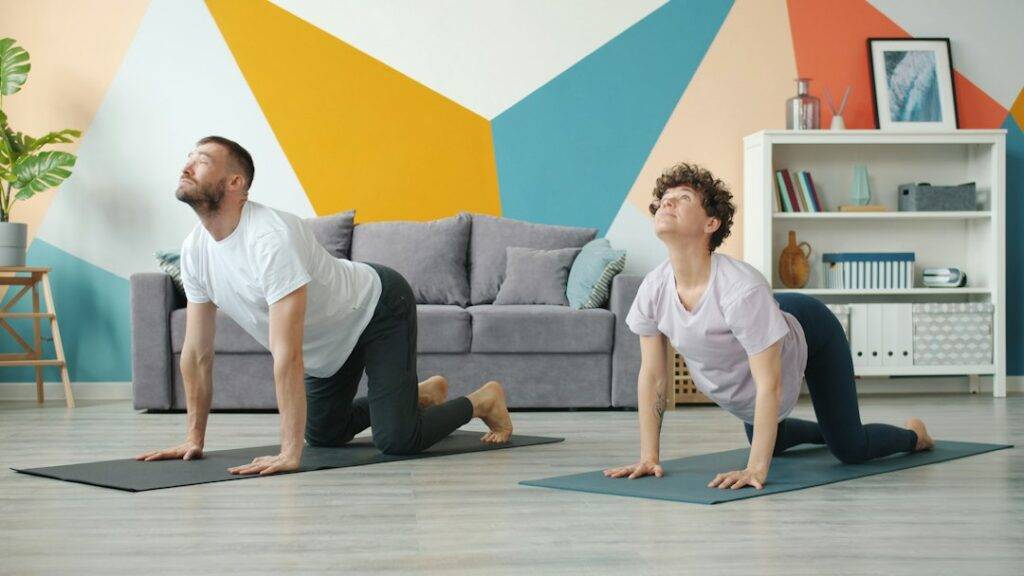
A full-body stretching routine for beginners should be simple enough to repeat and gentle enough that you do not dread it. You do not need advanced yoga poses or extreme flexibility. The aim is to move the neck, shoulders, upper back, hips, legs and ankles through comfortable ranges.
The NHS includes flexibility work in its advice on improving strength and flexibility. The key principle for beginners is gradual progression rather than forcing a position.
This routine is for generally healthy adults and is not intended as rehabilitation after injury or surgery.
What stretching can help with
Stretching can support comfortable range of motion, give you a structured movement break and help you notice where you feel stiff after sitting or inactivity. It can complement walking, strength and balance work.
It cannot diagnose pain, correct every posture issue or replace strengthening and aerobic activity.
Safety basics
- Move slowly.
- Do not bounce.
- Use support if balance is uncertain.
- Stop before pain.
- Breathe normally.
- Do not copy a range simply because someone else can reach it.
A 15-minute full-body stretching routine
1. Neck rotation
Turn your head gently to one side, return to centre and repeat to the other side. Do 3 to 5 repetitions each way.
2. Shoulder rolls
Roll both shoulders backwards 5 times and then forwards 5 times.
3. Chest opener
Stand or sit tall and draw your shoulders gently back. Hold for 15 to 20 seconds.
4. Upper-back reach
Reach your hands forward and allow the upper back to round slightly. Hold 15 to 20 seconds.
5. Side stretch
Reach one arm overhead and lean gently to the opposite side. Hold briefly and change sides.
6. Trunk rotation
Cross your arms over your chest and rotate the upper body gently to each side while keeping the hips facing forward.
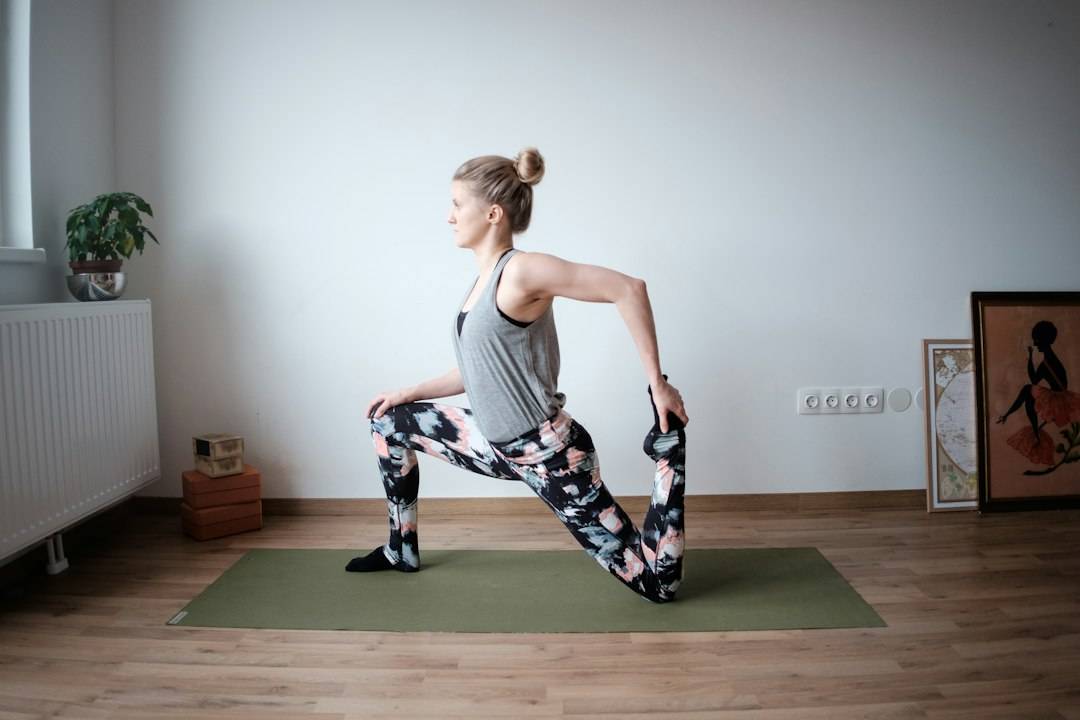
7. Hip-flexor stretch
Use a staggered stance and gently shift forward until you feel mild tension at the front of the back hip. Hold 15 to 30 seconds per side.
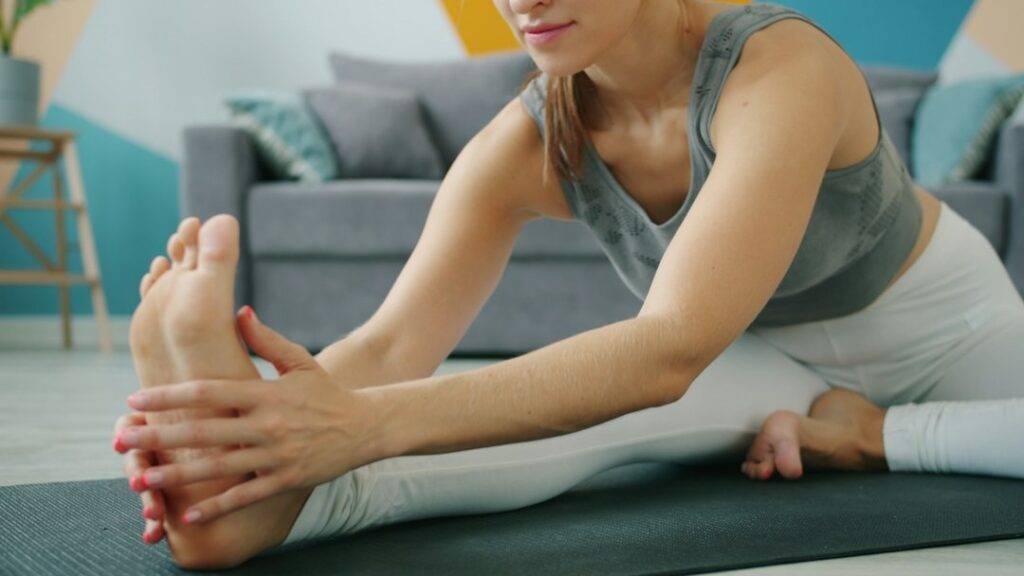
8. Hamstring stretch
Place one heel slightly forward with the knee soft and hinge from the hips until you feel a mild stretch behind the thigh.
9. Calf stretch
Place your hands on a wall, step one foot back and keep the heel down. Hold and switch sides.
10. Quadriceps stretch option
If balance and knee comfort allow, hold a chair, bend one knee and bring the heel gently towards the back of the thigh. Do not pull hard. If this position is uncomfortable, skip it.
11. Ankle circles
Circle one ankle in both directions, then change sides.
12. Wrist and forearm stretch
Extend one arm and gently move the wrist through flexion and extension. Keep the movement mild, especially if you use a keyboard or phone heavily.
13. Supported squat hold
Hold a chair or worktop and bend the knees slightly. Pause for a moment, then stand tall again. This is more active than a static stretch and helps integrate hip and ankle mobility.
14. Easy march
Finish with 30 to 60 seconds of easy marching or walking so the session ends with movement rather than a sudden stop.
How long should you hold stretches?
For beginners, 10 to 30 seconds is enough for most static stretches. Dynamic movements such as circles and turns can be repeated several times instead.
The aim is mild tension, not maximum range.
How often should you stretch?
You can do a gentle routine several times per week or daily if it feels comfortable. Frequency matters less than avoiding aggressive stretching and maintaining broader activity.
NHS guidance still recommends aerobic activity and strengthening work in addition to flexibility work.
Stretching before exercise
Before a walk or workout, active mobility movements may suit you better than long static holds. Shoulder circles, ankle rocks, marching and gentle hip movements can prepare you to move.
BetterCare’s beginner mobility routine is designed for that purpose.
Stretching after exercise
You may use gentle static stretches after activity if they feel good, but a long stretching session is not mandatory. A short walk and gradual cool-down may be enough after an easy session.
Stretching on rest days
A light routine can be useful on days without a formal workout, especially if you have spent long periods sitting. Keep it easy enough that it does not become another hard training session.
Stretching for desk workers
If your stiffness is mostly linked to computer work, focus on changing position and moving regularly rather than performing only neck stretches. BetterCare’s desk stretches for office workers gives a practical workday routine.
Stretching for walkers
Calf, hip and hamstring stretches can be useful after walking if they feel comfortable. If your main goal is to walk more consistently, use BetterCare’s walking plan for beginners.
Stretching and strength training
Flexibility does not replace strength. In fact, being able to control a range under light resistance is often more useful than simply reaching farther.
For a basic programme, use the beginner home strength workout alongside stretching on separate or combined days.
What if you are naturally inflexible?
You do not need to become extremely flexible to benefit from movement. Work within your available range and look for gradual improvements in comfort and control.
What if you are already very flexible?
More range is not always better. If you are already highly flexible, strength and control may be more useful than repeatedly pushing deeper stretches.
What if one stretch causes tingling or numbness?
Stop. Tingling, numbness or electric-shock sensations are different from normal muscle tension and should not be pushed through.
A 7-minute version
- neck turns;
- shoulder rolls;
- chest opener;
- side stretch;
- hamstring stretch;
- calf stretch;
- ankle circles;
- 30 seconds of marching.
A chair-based version
If standing is difficult, use seated neck turns, shoulder rolls, trunk rotations, knee extensions and ankle circles. BetterCare’s chair exercises for beginners provides a more complete seated option.
Morning versus evening stretching
There is no universally best time. Morning stretching can help you start moving after sleep, while evening stretching can provide a calm movement break after a long day.
Choose the time you will actually repeat.
When to get individual advice
Seek professional guidance if you have a recent fracture or operation, severe joint pain, significant swelling, new weakness, repeated dizziness or movement restrictions from a clinician.
How to progress over four weeks
Week 1: learn the positions with short holds.
Week 2: repeat the routine three times during the week.
Week 3: add a few seconds to the stretches that still feel comfortable.
Week 4: add mobility or strength work rather than forcing deeper stretches.
The main goal: comfortable, repeatable range
A useful stretching routine should support your activity, not become a test of how far you can reach. Keep the movements controlled, use mild tension and build consistency.
Fifteen minutes is enough for a full-body session. Shorter versions are still worthwhile.
Common full-body stretching mistakes
Trying to stretch every muscle equally deeply is unnecessary. Some movements may feel natural while others feel restricted. Use a mild range and let consistency do the work.
Another mistake is holding your breath. Breathing normally helps prevent unnecessary tension and makes it easier to notice when a position is becoming too intense.
How to choose the stretches you actually need
You do not have to perform all 14 movements every time. If your main activity is walking, calf, hip and hamstring work may be most useful. If you sit at a desk, upper-back, chest, hip and ankle movement may matter more.
Dynamic versus static stretching
Dynamic stretching involves moving through range repeatedly, such as arm circles or knee lifts. Static stretching involves holding a position. Both can be useful, but active movements often fit better before exercise, while static stretches may feel more comfortable afterwards or during a separate flexibility session.
Should you stretch a painful area?
Not automatically. Pain can have many causes, and repeatedly stretching a painful joint or nerve can make symptoms worse. If pain is persistent, severe or associated with weakness, swelling or numbness, seek assessment.
How to combine stretching with a weekly exercise plan
Stretching can sit around the activities that matter most. For example, use a short dynamic warm-up before walking, two strength sessions per week, and one or two longer stretching sessions on easier days.
The 10-minute low-impact workout is a practical option if you want a mixed movement session.
Stretching for older beginners
Use support, reduce range and prioritise movements that help with daily tasks. A chair-based version may be more appropriate than floor positions. The NHS encourages older adults to include strength, balance and flexibility work alongside regular activity.
How to progress without forcing range
Progress can mean smoother movement, better control, a slightly longer comfortable hold or needing less support. It does not have to mean reaching farther every week.
A practical 15-minute timer structure
Spend about one minute on the neck and shoulders, two minutes on the chest and upper back, three minutes on hips and trunk, four minutes on hamstrings, calves and ankles, then finish with several minutes of easy walking or marching.
This keeps the routine moving and prevents one area from taking over the entire session.
What if you are short on time?
Choose five movements: shoulder rolls, trunk rotation, hip-flexor stretch, hamstring stretch and calf stretch. Add 30 seconds of walking at the end. That gives you a useful whole-body reset in only a few minutes.
When to stop using a generic routine
If a stretch repeatedly produces pain, tingling, joint instability or a feeling of locking, remove it and seek appropriate advice. A generic web routine should never override individual rehabilitation instructions.
Reviewed: September 2026. General UK fitness information; not personalised rehabilitation advice.