Reducing food waste starts before food becomes leftovers. The way you store groceries can decide whether vegetables last the week, bread goes mouldy, opened packs are forgotten, or cooked food sits in the fridge without a plan.
The Food Standards Agency advises keeping chilled food properly cold and using storage instructions on the pack. Its current household food-safety work also emphasises correct chilling, storage of leftovers and avoiding cross-contamination.
This guide focuses on practical home storage: what to keep in the fridge, how to organise shelves, when to freeze food, how to label opened products and how to make “use first” food visible.
Start with the fridge temperature
A fridge that is too warm shortens the safe life of chilled food. The Food Standards Agency recommends keeping your fridge at 5°C or below.
Use a fridge thermometer if the built-in dial is unclear. The numbers on a thermostat do not always represent degrees Celsius.
Do not overfill the fridge
Cold air needs to circulate. Packing the fridge so tightly that air cannot move can create warmer areas and make it harder to see what you already own.
A slightly less crowded fridge is also easier to organise by use-by date.
Create an “eat first” area
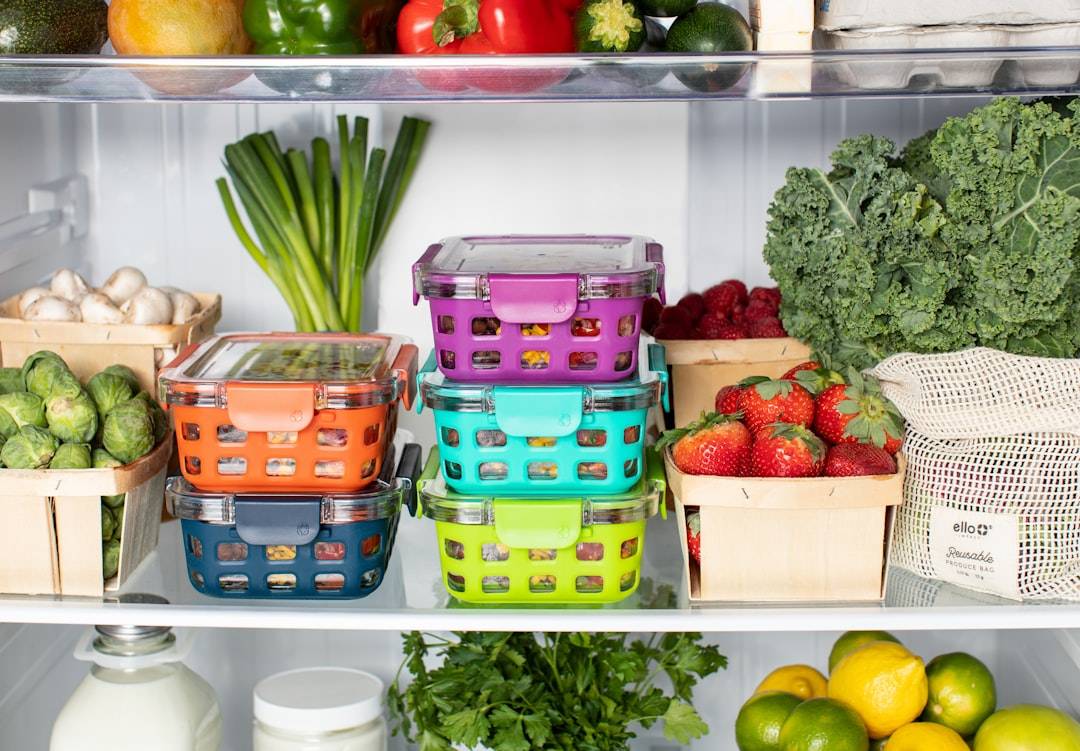
Choose one visible shelf, box or section for food that should be used soon. Put opened yoghurt, half-used vegetables, cooked leftovers and products approaching their use-by date there.
This simple visual cue can be more effective than relying on memory.
Move older food forward
When new groceries arrive, put the newer items behind older ones where practical. This is a household version of first-in, first-out stock rotation.
If you buy another pot of yoghurt while one is already open, make the open one the obvious first choice.
Store raw meat and poultry low down
The FSA recommends storing raw meat and poultry at the bottom of the fridge, covered or in a sealed container, so juices cannot drip onto ready-to-eat food.
Keep cooked foods, salads and foods eaten without further cooking above raw meat.
Use clear containers
Opaque tubs can hide leftovers until they are forgotten. Clear containers make it easier to see what needs using.
If a container is not transparent, label it with the food and date.
Write opening dates on packs
Many foods have instructions such as “use within 3 days of opening”. If you cannot remember when you opened the pack, write the date on it.
A small marker pen in the kitchen can prevent a lot of guesswork.
Do not rely only on the printed date
The printed date matters, but so do storage and opening instructions. An opened product may need using sooner than the original best-before or use-by date suggests.
BetterCare’s use-by vs best-before guide explains the difference between safety and quality dates.
Freeze food before it becomes urgent
If you know you will not use meat, bread, cooked food or another freezable product in time, freeze it early rather than waiting until the last possible day.
Early freezing also tends to preserve quality better than freezing something after several days in the fridge.
Label frozen food
Write the name and freezing date on each container or freezer bag. If the food is a prepared meal, add the portion size or key ingredient if useful.
A freezer without labels often becomes a collection of unidentified tubs.
Freeze in useful portions
Do not freeze four servings together if you usually cook for one. Portion food before freezing so you can defrost only what you need.
BetterCare’s meal-prep guide for one person covers portioning and weekly planning.
Bread: freeze half when you buy it
If you live alone or eat bread slowly, freezing half the loaf on shopping day can prevent mould. Slice it first so individual pieces can be removed as needed.
Fruit and vegetables: do not treat them all the same
Some produce keeps better chilled, while some items are better stored at room temperature until ripe. Follow pack instructions where provided.
More important than chasing perfect storage rules is checking produce regularly and planning meals around what is ripening fastest.
Use a “ripening now” bowl
Keep fruit that needs eating soon where you can see it. Move ripe pears, peaches, bananas or avocados to the front of your plan rather than leaving them mixed with newer fruit.
Wash produce when it makes sense
Pre-washing everything immediately can sometimes add moisture and shorten storage life. Unless the product instructions say otherwise, you can often wash fruit and vegetables before use rather than before storage.
Keep dry food dry
Rice, pasta, flour, cereals and other dry goods keep best in cool, dry storage with packaging properly closed.
If you transfer them into containers, keep the original date information or write it on the new container.
Do not create a “cupboard graveyard”
Once a month, bring older tins, packets and jars to the front. Use them in the next meal plan before buying more of the same category.
BetterCare’s grocery shopping for one guide explains how checking cupboards before shopping reduces duplicates.
Store leftovers with a plan
Do not put a container in the fridge with no idea when it will be eaten. Decide immediately: tomorrow’s lunch, tomorrow’s dinner, or freezer.
If the answer is “maybe sometime”, freezing it is often more realistic.
Cool cooked food safely
Food should not sit at room temperature for long periods. Cool cooked food promptly and refrigerate or freeze it appropriately.
For reheating and leftover timing, use BetterCare’s leftovers food-safety guide.
Use containers that match your portions
Huge containers make small leftovers easy to overlook and take up unnecessary fridge space. Use smaller containers for single portions and larger ones only for food you genuinely plan to serve together.
Separate ingredients from finished meals
If you cook several components, storing them separately can create more options. Cooked rice, roasted vegetables and a protein can become different meals across two days instead of one large mixed dish you tire of.
Use labels for high-risk foods
Labelling is most useful when safety matters or when several people share the fridge. Write “opened Tuesday”, “cooked Wednesday” or the actual date rather than vague notes like “recent”.
What to keep on the fridge door
The door is usually one of the warmer parts of the fridge. Use it for products less sensitive to temperature variation, following manufacturer guidance. Avoid storing highly perishable foods there if the pack specifies colder storage.
What to do before a weekly shop
Spend five minutes checking the fridge, freezer and cupboards. Build your shopping list around what is actually missing.
Meal planning from existing food first is one of the simplest ways to reduce waste.
Use a “freezer inventory”
Keep a short list on paper, your phone or the freezer door. Remove items as you use them.
This prevents buying more frozen peas, chicken or bread while several packs are already hidden underneath other food.
Do not overbuy because something is on offer
A larger pack is only cheaper if you use it. Two-for-one deals and family-size bags can increase waste in a one-person household.
BetterCare’s cheap healthy meals for one guide focuses on value without relying on oversized packs.
Make the most perishable food visible
Out of sight often means out of mind. Keep the foods that need using soonest at eye level or in the front of the fridge.
Move long-life items backwards.
What not to do
- do not leave raw meat above ready-to-eat food;
- do not ignore “use within X days of opening” instructions;
- do not freeze food after its use-by date has passed;
- do not repeatedly cool and reheat the same leftovers;
- do not rely on memory when several containers look alike.
A simple weekly storage routine
Shopping day: rotate older food forward, freeze anything you already know will not be used.
Midweek: check the eat-first area and plan one meal around it.
End of week: move safe leftovers to the freezer and check produce before the next shop.
The goal: make food easy to see and easy to use
Reducing waste is not mainly about perfect storage hacks. It is about keeping food cold where required, protecting it from contamination, making short-life items visible and freezing portions before they are forgotten.
A fridge and freezer that tell you what needs using next are easier to manage than one packed with hidden food.
How to store half-used ingredients
Half an onion, half a tin of beans, a piece of cheese or a partly used jar should not disappear behind other food. Transfer opened tins where appropriate, cover or seal cut produce, and keep partly used ingredients in one visible area so they are used before a new pack is opened.
How to prevent freezer waste
Freezing food only reduces waste if you eventually eat it. Keep older frozen food near the front, avoid adding new portions on top of forgotten ones, and plan one “freezer meal” each week if your freezer tends to fill up.
What to do with produce that is starting to soften
Use still-safe vegetables in soup, curry, pasta sauce or an omelette. Ripe fruit can go into porridge, yoghurt or smoothies where appropriate. The aim is to use food earlier, not to wait until it is clearly spoiled.
Make your storage system easy for everyone in the house
If several people share the kitchen, agree on one eat-first area and simple labels. A system only works if everyone knows where opened food, leftovers and short-dated products go.
A ten-minute weekly reset
Check fridge temperature, wipe obvious spills, identify the three foods that need using first, look at the freezer inventory and move older cupboard items forward. That short routine can prevent duplicate shopping and forgotten leftovers.
Reviewed: September 2026. General UK household food-storage information based on current Food Standards Agency guidance.