Outdoor walking is useful, but weather, darkness, caring responsibilities, limited time or not feeling confident outside can make it difficult to stay consistent. An indoor walking workout gives you another option: simple walking-based movement in a hallway, living room or other clear space.
The NHS recommends regular physical activity and reducing long periods of sitting. Its adult activity guidance says adults should aim for some activity every day and build towards a weekly mix of aerobic and strengthening work.
This guide is for beginners who want a practical home walking routine. It is general fitness information, not a rehabilitation plan or treatment for a medical condition.
Does walking indoors count as exercise?
Yes. Your body does not require a pavement for walking to count as movement. Marching on the spot, walking circuits through a room, stepping side to side and taking repeated short laps can all raise your activity level.
The effort matters more than whether you are indoors or outdoors. A gentle indoor walk may be light activity, while a faster continuous session can become moderate activity for some people.
Who indoor walking can suit
Indoor walking can be useful when:
- the weather is poor;
- you do not feel comfortable walking outside alone;
- you are caring for someone and need to stay nearby;
- you work from home and want a short movement break;
- you only have 10 to 20 minutes;
- you are starting from a low activity level.
If you can comfortably walk outside, indoor walking does not need to replace it. Think of it as a backup that helps you stay consistent.
Set up a safe indoor walking space
Choose a clear route with enough room to turn. Remove loose rugs, bags, cables, pet toys or anything else you might catch your foot on. Wear footwear that feels secure if your floor is slippery.
If you use a hallway, make sure doors will not suddenly open into your route. Avoid repeatedly walking around a very tight space if turning quickly makes you dizzy or unsteady.
A 15-minute indoor walking workout for beginners
This routine uses simple blocks. Keep the pace comfortable at first. You should be able to speak in short sentences without feeling distressed.
Minutes 0 to 2: easy march
Walk slowly around the room or march gently on the spot. Let your arms swing naturally. Use this time to settle into the session rather than immediately pushing the pace.
Minutes 2 to 4: steady walk
Increase the pace slightly. Walk laps around the room, down a hallway and back, or alternate 20 steps forward with marching on the spot.
Minutes 4 to 5: side steps
Step to the right, bring the left foot across, then reverse direction. Keep the steps small and controlled.
Minutes 5 to 7: brisker walk
Return to forward walking or marching. Increase your arm swing and pace slightly if you feel comfortable.
Minutes 7 to 8: heel taps
Alternate tapping one heel gently in front of you, then the other. Keep one foot firmly on the floor at all times.
Minutes 8 to 10: steady walking
Return to your normal indoor walking route. This is a useful point to check how you feel. Slow down if you are becoming breathless beyond a comfortable level.
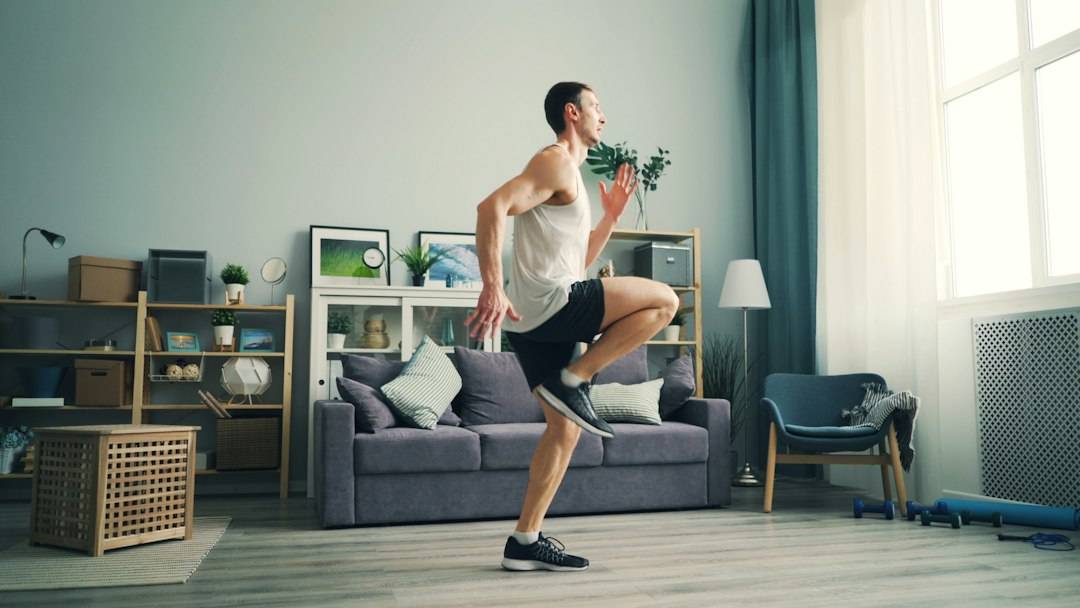
Minutes 10 to 11: knee lifts
March on the spot and lift each knee only as high as feels comfortable. Do not lean backwards to make the movement bigger.
Minutes 11 to 13: brisker block
Walk slightly faster again. Keep your steps controlled and continue breathing normally.
Minutes 13 to 15: easy cool-down
Gradually slow your pace. Finish with a minute of easy walking rather than stopping suddenly.
What if 15 minutes is too much?
Start with 5 minutes. You can complete several short sessions across the day. The important thing is to build a repeatable habit.
BetterCare’s 10-minute low-impact workout is another short option when you want more variety than walking alone.
How hard should indoor walking feel?
A useful beginner method is the talk test. During moderate effort, you can usually talk but not sing comfortably. If you are gasping, feel faint, have chest pain or become acutely unwell, stop.
Your effort level will depend on your current fitness, pace, room size and whether you add arm movements or faster intervals.
How to make indoor walking less boring
Indoor walking can become repetitive, so use simple structure:
- walk during one television programme;
- use music with a comfortable beat;
- alternate normal walking with side steps;
- count five-minute blocks instead of total steps;
- walk while listening to a podcast or audiobook;
- change direction every few minutes.
You do not need complicated choreography.
Can indoor walking replace an outdoor walk?
It can provide useful aerobic movement, especially when outdoor walking is impractical. Outdoor walking may also give you fresh air, varied terrain and time away from the house, so the two options are not identical.
If your aim is to build a structured outdoor routine, BetterCare’s 6-week walking plan for beginners remains the better progression. Use indoor sessions when the weather or schedule disrupts that plan.
How many days a week should you walk?
The NHS recommends spreading activity across the week and reducing long periods of sitting. A beginner can start with short walks on most days rather than trying to complete one large session.
For many adults, the longer-term public-health target is at least 150 minutes of moderate-intensity activity each week, alongside strengthening work. You do not have to reach that total immediately if you are currently inactive.
Indoor walking for older adults
The NHS activity guidance for older adults recommends being active every day where possible and reducing long periods of sitting.
Older beginners should keep the route clear and use a support point if turning or changing direction feels unsteady. If balance is a concern, BetterCare’s beginner balance routine can complement walking.
What if you work from home?
Use indoor walking as a movement break rather than waiting for a perfect workout window. Five minutes between meetings, a lap around the home after lunch and another short block later can add meaningful movement to a sedentary day.
If sitting at a desk is the main problem, combine walking with BetterCare’s desk stretches for office workers.
How to increase the challenge
Once 15 minutes feels comfortable, change only one thing at a time:
- add 2 to 5 minutes;
- walk a little faster during one block;
- increase arm swing;
- add a few controlled side steps;
- include one extra session during the week.
You do not need ankle weights or complicated equipment to make progress.
Add strength work on separate days
Walking is mainly aerobic activity. It does not replace all strengthening work. NHS guidance recommends strengthening the major muscle groups on at least two days per week.
Use BetterCare’s beginner home strength workout or resistance-band routine on separate or combined days depending on your schedule.
What if walking in circles makes you dizzy?
Use a straighter route, such as a hallway, and reduce the number of turns. You can also march on the spot facing one direction.
If dizziness is new, recurrent or unexplained, stop and seek appropriate medical assessment rather than trying to train through it.
What if your knees or hips hurt?
Reduce the pace, shorten the session and use smaller steps. Avoid deliberately pushing through sharp or worsening pain.
If pain persists, affects normal walking or follows an injury, get individual advice. A generic walking plan cannot identify the cause.
Indoor walking after a long inactive period
If you have been very inactive, begin with short easy blocks. Five minutes may be enough. Repeat that until it feels routine, then add time gradually.
The aim is to leave enough energy that you are willing to do the session again tomorrow or the next day.
A simple one-week starter plan
- Monday: 10-minute indoor walk.
- Tuesday: normal daily movement plus a few desk or chair exercises.
- Wednesday: 15-minute indoor walk.
- Thursday: beginner strength session.
- Friday: 10-minute indoor walk.
- Saturday: outdoor walk if practical, otherwise another indoor session.
- Sunday: easy movement and recovery.
Adjust this to your current level. There is no prize for doing every day if that leaves you exhausted or sore.
How to track progress without obsessing over steps
You can track minutes instead of steps. Record how many sessions you completed, how long you walked and whether the same pace feels easier after a few weeks.
A step count can be useful, but it is not the only valid measure of activity.
When to seek individual advice
Speak to an appropriate healthcare professional before relying on a general exercise plan if you have a recent heart event or operation, severe breathlessness, repeated falls, unexplained dizziness, significant mobility problems or medical restrictions on activity.
Stop and seek urgent help if you develop severe chest pain, fainting or another concerning acute symptom during exercise.
The main goal: remove the weather excuse
Indoor walking is not meant to be glamorous. Its strength is that it is available when outdoor plans fall apart. A clear room, a safe route and 10 to 15 minutes can be enough to keep the habit alive.
Use it as a flexible tool alongside outdoor walking, strength work and other movement you enjoy.
Reviewed: September 2026. General UK fitness information for beginners; not personalised rehabilitation or medical advice.