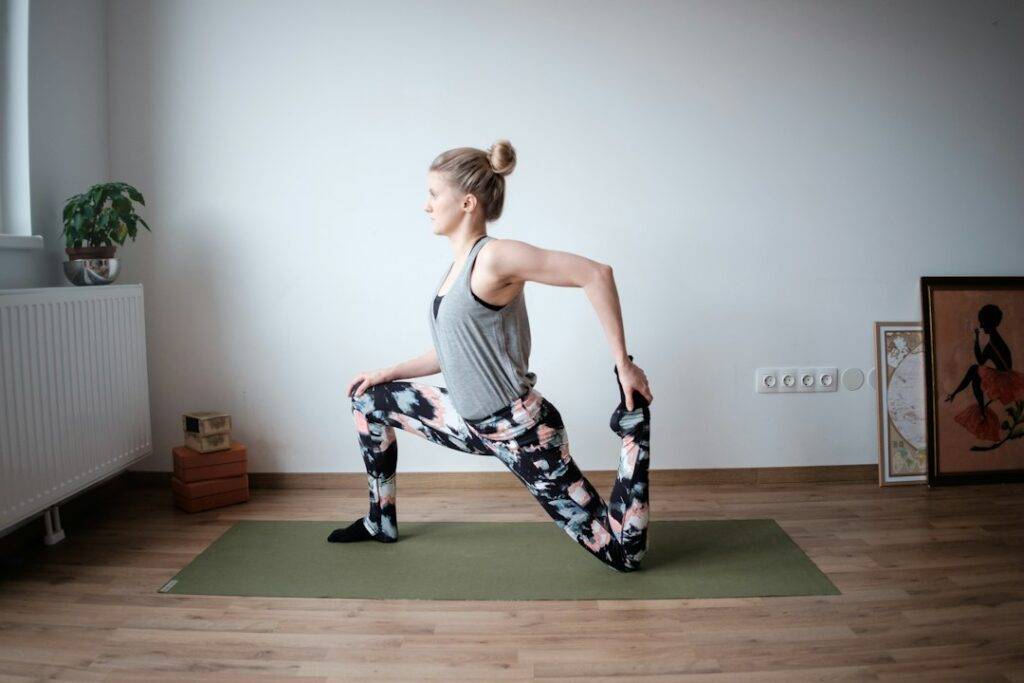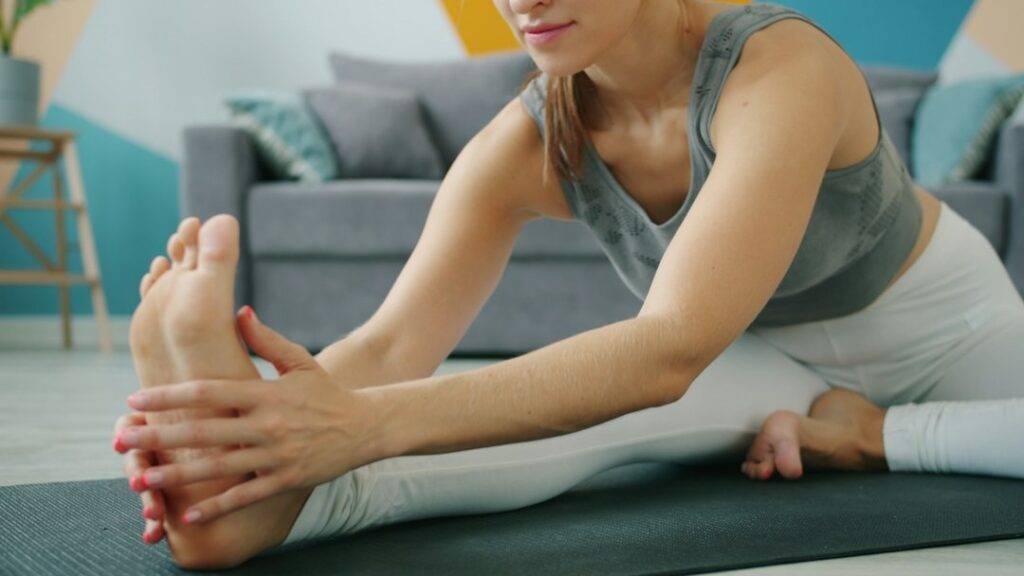
A mobility routine is different from simply stretching. Mobility means being able to move a joint through a useful range with control. For beginners, that can mean practising slow circles, reaches, weight shifts and simple movements that make everyday activity feel easier.
The NHS includes flexibility and strengthening work within its guidance on strength and flexibility, and encourages people to build up gradually. A beginner mobility routine should feel controlled, not forced.
This guide is for generally healthy adults. It is not a substitute for rehabilitation after surgery, injury or a neurological or joint condition.
Mobility versus flexibility
Flexibility describes how far tissues can lengthen. Mobility is broader: it combines available range with the ability to control that range.
For example, being able to pull your knee towards your chest while lying down shows some hip flexibility. Being able to lift your knee while standing without losing balance involves mobility and control.
Why beginners can benefit from mobility work
Mobility routines can be useful if you sit for long periods, feel stiff after inactivity, are returning to exercise, or want a gentler warm-up before walking or strength work.
They can also help you notice which movements feel easy and which feel restricted without turning every sensation into a diagnosis.
Set up safely
- Use a clear floor area.
- Keep a wall or stable chair nearby if balance is uncertain.
- Move slowly.
- Stay within a comfortable range.
- Do not bounce into end positions.
- Stop if you feel sharp pain, dizziness or sudden weakness.
A 12-minute beginner mobility routine
1. Neck rotation
Turn your head slowly to one side, return to centre, then turn to the other. Keep the movement comfortable and repeat 3 to 5 times each way.
2. Shoulder circles
Make slow circles with both shoulders, first backwards and then forwards. Keep your neck relaxed.
3. Arm circles
Extend your arms slightly out to the sides and make small controlled circles. Increase the circle only if it feels comfortable.
4. Thoracic rotation
Sit or stand tall with your arms crossed over your chest. Rotate your upper body gently to one side, return to centre, then rotate to the other side.
Keep your hips facing forward rather than forcing a large twist.
5. Side bend
Slide one hand down the side of your thigh while reaching the other arm slightly overhead. Return to centre and repeat on the other side.
6. Hip circles
Stand with your hands on your hips and feet comfortably apart. Make small circles with your pelvis. Change direction after several repetitions.
7. Supported knee lift
Hold a chair lightly and lift one knee towards your chest through a comfortable range. Lower it with control and switch sides.
8. Hip open-and-close
Holding support if needed, lift one knee slightly and guide it outward, then return to the start. Keep the movement small and controlled.
9. Ankle circles
Lift one foot slightly and circle the ankle slowly in both directions. Repeat on the other side.
10. Heel-to-toe rocks
Stand with support nearby. Rock gently from your heels towards the balls of your feet and back again without losing control.
11. Supported squat-to-reach
Hold a chair or worktop, bend your knees slightly, then stand tall and reach your arms upward through a comfortable range.
This links ankle, knee, hip and shoulder movement in one simple pattern.
12. Easy march
Finish with 30 to 60 seconds of marching on the spot. This helps transition into walking or another activity.
How often should beginners do mobility work?
You can use a short mobility routine most days if it feels comfortable. It can also be used before a walk or strength session.
Mobility work does not replace the NHS recommendation for regular aerobic activity and muscle-strengthening work. It supports those activities rather than replacing them.
Mobility before strength training
A few controlled mobility movements can help you feel prepared for strength work. For example, shoulder circles before wall press-ups, ankle rocks before squats, and hip movements before sit-to-stands.
If you are ready for structured strength work, use BetterCare’s beginner home strength workout or resistance-band routine.
Mobility before walking
You do not need a long warm-up before an easy walk. A few ankle circles, knee lifts and gentle marching can be enough.
BetterCare’s walking plan for beginners gives a progressive schedule if walking is your main activity goal.
Mobility for people who sit a lot
If most of your day is spent sitting, use mobility as a break from one position. Stand up, roll your shoulders, turn gently through the upper back, circle your ankles and walk briefly.
For work-focused ideas, see BetterCare’s desk stretches for office workers.
What if one side moves less than the other?
Small differences are common. Use the range available on each side rather than forcing the stiffer side to match immediately.
If a difference is new, large, painful or associated with weakness or numbness, seek assessment rather than treating it as a simple mobility issue.
What if you hear clicking or cracking?
Joint noises can occur during movement and are not automatically a sign of damage. The important question is whether there is pain, swelling, locking or loss of function.
If a joint becomes painful, swollen or unstable, get individual advice.
How to progress mobility safely
Progress is not about making every range larger. You can improve by moving more smoothly, using less support, controlling the movement better or linking movements together.
Avoid forcing deeper ranges simply because you think flexibility must always increase.
A five-minute mobility version
- 5 shoulder circles each direction;
- 3 upper-body rotations each side;
- 5 supported knee lifts each side;
- 5 ankle circles each direction;
- 30 seconds of heel-to-toe rocking;
- 30 seconds of easy marching.
Mobility for older beginners
NHS guidance for older adults encourages daily activity where possible and regular strength, balance and flexibility work. Mobility exercises can fit well alongside those goals.
If balance is a concern, BetterCare’s beginner balance routine provides a more focused progression.
When chair-based mobility is a better option
If standing is tiring or unsteady, do shoulder circles, trunk turns, ankle movements and knee extensions while seated.
BetterCare’s chair exercises for beginners offers a full seated routine.
What mobility work cannot do
A general mobility routine cannot diagnose the cause of pain, repair an injury or replace rehabilitation. It also cannot guarantee prevention of falls or joint problems.
Use it as a low-risk movement habit, not as a cure-all.
When to get individual advice
Seek professional guidance if you have a recent operation or fracture, repeated falls, severe joint pain, sudden weakness, neurological symptoms, significant swelling or movement restrictions from a clinician.
A simple weekly pattern
Monday: mobility plus walking.
Tuesday: strength session.
Wednesday: short mobility routine.
Thursday: walking or indoor walking.
Friday: mobility plus strength.
Weekend: easy activity you enjoy.
The main goal: move with more control
A useful mobility routine is not a performance. It is a chance to move slowly through comfortable ranges and prepare your body for the activities you actually want to do.
Keep the routine simple enough to repeat. Ten minutes of controlled movement can be more useful than an elaborate routine you never return to.
Common mobility mistakes beginners make
Trying to make every circle as large as possible is one common mistake. Mobility work is more useful when you can control the whole movement. Smaller circles performed smoothly are often better than large circles created by leaning or twisting the rest of the body.
Another mistake is moving too quickly. Slow movement helps you notice where control changes and makes it easier to stop before discomfort.
Mobility for the hips after prolonged sitting
Long periods in a chair can make the hips feel stiff even when there is no injury. Gentle knee lifts, small hip circles, supported side steps and short walks can restore movement without aggressive stretching.
If you also want a sitting-based option, the chair exercise routine includes hip marching and ankle work.
Mobility for the shoulders and upper back
Use shoulder rolls, wall slides if comfortable, gentle arm circles and upper-body rotations. Keep the ribs relaxed rather than arching the lower back to create more shoulder range.
For people who work at a computer, frequent position changes usually matter more than one long mobility session at the end of the day.
How to use mobility as a warm-up
Before walking, use ankle circles, heel-to-toe rocks and marching. Before a strength session, add shoulder circles, supported squats and hip movements. Keep the warm-up short enough that it prepares you rather than tires you.
How to use mobility on a recovery day
Choose five or six easy movements and keep the effort low. A recovery-day mobility session should not leave muscles exhausted. You can add an easy walk if you feel comfortable.
How to know whether to progress
Progress when the current movement feels smooth and controlled on both sides. You can increase the range slightly, add repetitions or reduce support. Do not progress simply because a calendar says it is time.
A four-week beginner mobility progression
Week 1: learn six movements and repeat them twice during the week.
Week 2: perform the full routine on three days.
Week 3: add a short walk or strength session after mobility on two days.
Week 4: keep the routine but use only the movements that genuinely help you prepare for your other activity.
When a specific joint needs more than a generic routine
If one joint repeatedly locks, gives way, swells, becomes hot, or loses range suddenly, a general mobility routine is not the right tool. Seek assessment so the cause can be identified.
Similarly, new weakness, numbness or persistent tingling should not be treated as ordinary stiffness.
Mobility does not have to look impressive
The most useful routine may look very simple: ankle rocks, shoulder circles, trunk rotations, knee lifts and a few controlled squats. The value comes from repetition and control, not complexity.
Reviewed: September 2026. General UK fitness information; not personalised rehabilitation advice.