An evening stretching routine can be a simple way to move after a day of sitting, commuting, caring or standing. It does not need to be intense, and it should not be treated as a cure for insomnia or pain.
The NHS includes flexibility work within its guidance on strength and flexibility. For beginners, the useful approach is controlled movement, comfortable range and gradual progression.
This routine is designed for generally healthy adults who want a calm 10-minute movement habit in the evening.
What evening stretching can and cannot do
Gentle stretching can help you move stiff areas through a comfortable range after a long day. It may also feel relaxing because the pace is slower than a workout.
It cannot guarantee better sleep, correct every posture problem or treat persistent pain by itself.
Before you start
- Use a clear space.
- Move slowly.
- Do not bounce.
- Breathe normally.
- Stop if a stretch becomes painful.
A simple 10-minute evening stretching routine
1. Shoulder rolls
Roll the shoulders backwards 5 times, then forwards 5 times.
2. Neck turn
Turn your head gently to each side 3 to 5 times.
3. Chest opener
Sit or stand tall and draw the shoulders gently back. Hold 15 to 20 seconds.
4. Upper-back reach
Reach both hands forward and let the upper back round slightly. Hold 15 to 20 seconds.
5. Side stretch
Reach one arm overhead and lean gently to the opposite side. Repeat both sides.
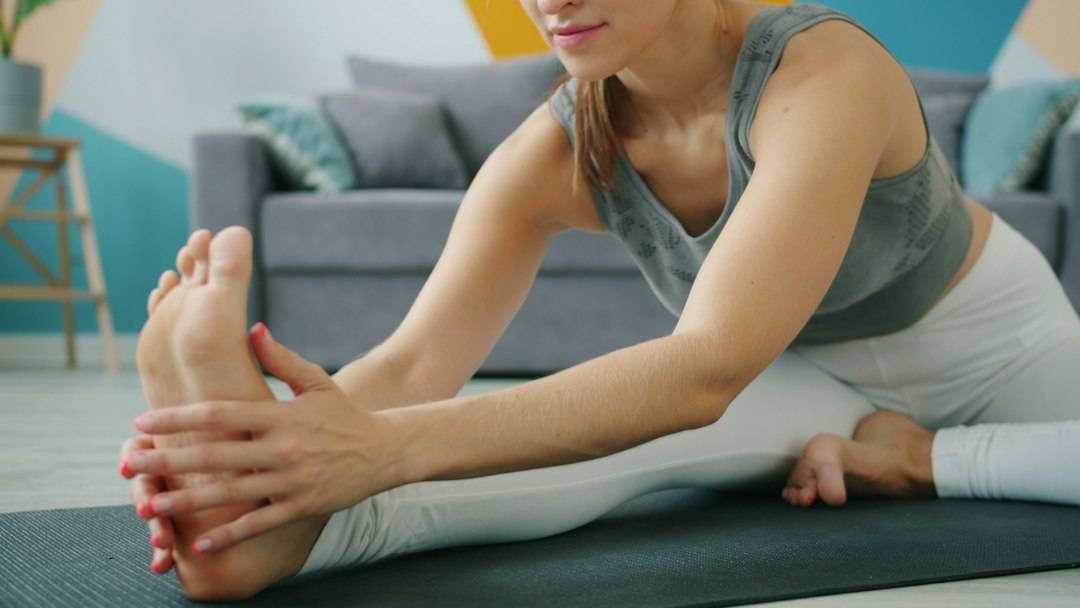
6. Seated hamstring stretch
Sit near the edge of a chair, extend one leg with the heel down and hinge slightly forward. Hold 15 to 30 seconds, then switch.
7. Calf stretch
Use a wall, step one foot back and keep the heel down. Hold, then change sides.
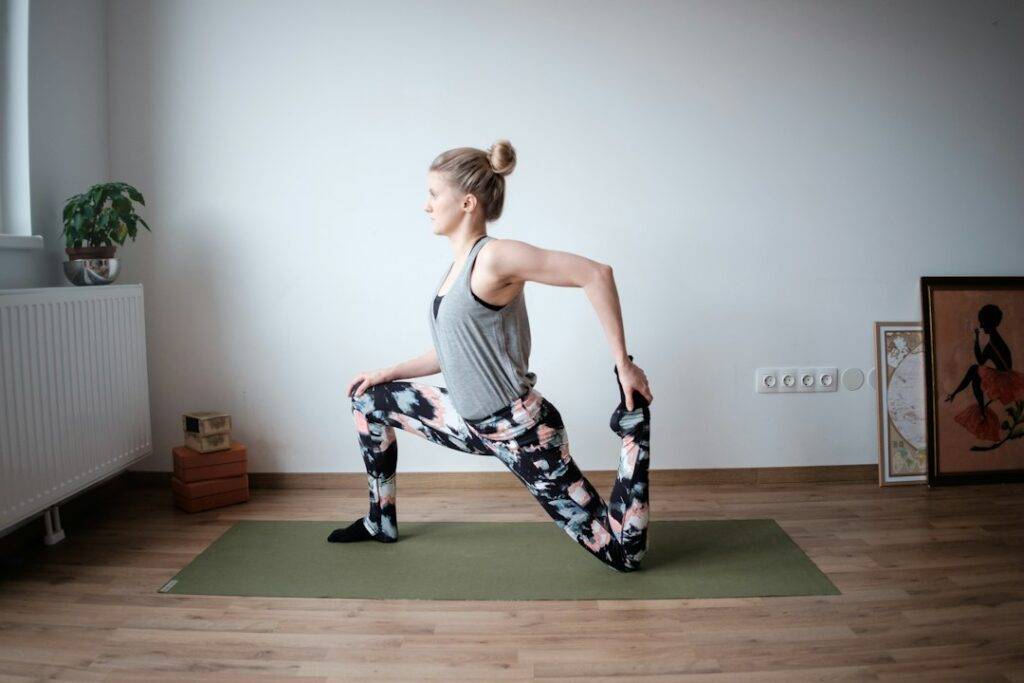
8. Hip-flexor stretch
Use a staggered stance and gently shift forward while keeping the pelvis controlled.
9. Ankle circles
Circle each ankle slowly in both directions.
10. Easy breathing and march-down
Finish with several slow breaths and 30 seconds of easy marching or walking around the room.
Should you stretch immediately before bed?
You can if it feels comfortable. Some people prefer stretching 30 to 60 minutes before bed, while others do it earlier in the evening. There is no requirement to stretch at a precise time.
Evening stretching after a desk day
If most of your day was spent at a computer, focus on changing position rather than only stretching one area. Stand, walk briefly, roll the shoulders and move the hips and ankles.
BetterCare’s desk stretches for office workers gives a workday-specific routine.
Evening stretching after walking
You do not need a complicated cool-down after an easy walk. A few gentle calf, hamstring and hip stretches can be enough if they feel good.
If you are building walking fitness, BetterCare’s walking plan for beginners provides a gradual schedule.
Evening stretching after strength work
Stretching is optional after strength exercise. You can use a few comfortable movements if you feel stiff, but it does not need to be long.
For strength training itself, see BetterCare’s beginner home strength routine.
What if you are very stiff at night?
Start with movement rather than long holds. Walk around the room, do shoulder circles, ankle circles and gentle knee lifts, then add short stretches.
What if stretching wakes you up?
Keep the routine gentler or do it earlier. Avoid turning an evening stretch into an intense workout if your goal is winding down.
How long should each stretch last?
For beginners, 10 to 30 seconds is usually enough for a static stretch. Dynamic movements can be repeated several times instead.
A five-minute version
- shoulder rolls;
- neck turns;
- 20-second chest opener;
- 20-second hamstring stretch each side;
- 20-second calf stretch each side;
- 30 seconds of walking.
Should stretching hurt?
No. A stretch should feel like mild tension. Sharp, catching or worsening pain is a reason to stop.
What if one side feels tighter?
Use a comfortable range on both sides. Do not force the tighter side to match immediately. If a difference is new or painful, get individual advice.
Evening flexibility for older adults
NHS guidance for older adults encourages regular activity plus strength, balance and flexibility work. A short evening routine can fit that pattern if it feels safe.
If standing is difficult, use BetterCare’s chair exercises for beginners.
When mobility work may suit you better
If you prefer active circles and controlled joint movement rather than longer holds, use BetterCare’s beginner mobility routine.
When to seek individual guidance
Get advice if you have a recent operation or fracture, severe joint pain, new neurological symptoms, repeated dizziness or clinician-imposed movement restrictions.
The main goal: end the day with movement, not intensity
Evening stretching should be easy to repeat. Ten minutes is enough, and five minutes is still worthwhile if that is what fits your day.
The routine should leave you feeling comfortable, not exhausted.
How to make an evening routine feel genuinely calming
Keep the pace slow, reduce bright-screen interruptions and avoid turning the session into a flexibility challenge. You do not need to count every second precisely. A few relaxed breaths during each position are enough.
If you have just finished a demanding workout, allow your breathing to settle first. Evening stretching should not become an extra hard session.
Common evening-stretching mistakes
One mistake is forcing the hamstrings or lower back because they feel “tight”. A strong pulling sensation is not necessary. Another is choosing complicated floor positions that are awkward to get into or out of, especially when tired.
Use a chair or wall when it makes the routine easier and safer.
Evening stretching if you have been on your feet all day
If your day involved standing or walking, prioritise the calves, ankles, hips and gentle upper-back movement. You may prefer a shorter routine than someone who sat all day.
Elevating the feet or simply sitting comfortably afterwards may feel better than adding more exercise.
Evening stretching if you have been sitting all day
Start with walking around the room for a minute before stretching. Then use chest opening, upper-back rotation, hip movement, calf stretching and ankle circles.
That sequence changes position first, then adds flexibility work.
Can evening stretching be combined with indoor walking?
Yes. You can do a short indoor walking session earlier in the evening and use stretching later as a gentle cool-down. Keep the walking intensity appropriate for the time of day and your own preferences.
How to adapt the routine for limited floor mobility
You do not need to get onto the floor. Every movement in this guide can be performed standing or seated. Use a stable chair for hamstring work, ankle movement and trunk rotation.
How to adapt it for balance concerns
Keep one hand on a stable surface during standing stretches and avoid single-leg positions. If you regularly feel unsteady, use BetterCare’s balance routine separately during the day when you are more alert.
What if you wake up sore after stretching?
Reduce the intensity and duration the next time. Mild unfamiliar muscle sensation can occur, but a routine that repeatedly causes pain or significant soreness is too aggressive for its purpose.
A simple seven-day pattern
Monday: full 10-minute evening routine.
Tuesday: five-minute version.
Wednesday: walking or strength only.
Thursday: full routine.
Friday: five-minute version after a desk day.
Weekend: use stretching only if it feels useful rather than treating it as an obligation.
When evening discomfort needs more than stretching
Persistent night pain, new numbness, swelling, unexplained weakness or pain that regularly wakes you should not be managed only with a generic routine. Seek appropriate clinical advice.
Keep the goal realistic
The best evening stretch routine is one you can repeat without turning it into another task to “win”. Use it to move gently, change position and finish the day more comfortably.
How to build the routine around your actual evening
If you usually finish dinner, tidy up, watch television and then go to bed, place the routine at the point where it creates the least friction. For some people that means stretching before sitting down for the evening; for others it means using five minutes during a television break.
The routine does not have to happen in one uninterrupted block. Two or three short movement periods can work just as well if that suits your schedule.
Should you stretch after a hot shower or bath?
Warmth may make movement feel more comfortable, but it is not a requirement. You still need to stay within a gentle range. Feeling warmer does not mean the tissues should be pushed farther.
How to keep evening stretching from becoming another chore
Choose only the movements that consistently feel useful. You might keep shoulder rolls, a calf stretch, a hamstring stretch and ankle circles, and drop anything that feels awkward. A four-movement routine you repeat is more valuable than a perfect list you avoid.
When to choose walking instead
If you have been sedentary all evening, a few minutes of easy walking may be more useful than immediately sitting down to stretch. Walk first, then decide whether any stretches still feel necessary.
BetterCare’s indoor walking guide gives a simple structure when you want a little more movement without going outside.
Reviewed: September 2026. General UK fitness information; not sleep treatment or personalised rehabilitation advice.