If you are trying to reach the UK adult fibre target, the hardest part is usually not knowing that fibre matters. It is turning the target into ordinary meals you can actually repeat. A useful 30g fibre meal plan should not depend on unusual ingredients, huge portions or weighing every mouthful.
The NHS recommends adults aim for about 30g of fibre a day as part of a balanced diet. Its guide to getting more fibre into your diet suggests using a mixture of wholegrains, fruit, vegetables, potatoes with their skins, beans, lentils, nuts and seeds. This meal plan turns those principles into a realistic day, then gives alternatives so you can adapt it to your appetite, budget and routine.
If you want the broader explanation of the 30g target before using a meal plan, start with our guide to eating 30g of fibre a day.
What this 30g fibre meal plan is designed to do
The plan is not a prescription and the fibre figures are approximate. Fibre varies by brand, portion size and preparation. The aim is to show how an ordinary day can reach roughly 30g without one meal doing all the work.
A practical pattern is to spread fibre across the day: roughly 7 to 9g at breakfast, 7 to 10g at lunch, several grams from a snack, and another 8 to 10g at dinner. Some days will be higher and some lower. Consistency across the week matters more than hitting exactly 30.0g every day.
Breakfast: porridge, fruit and seeds
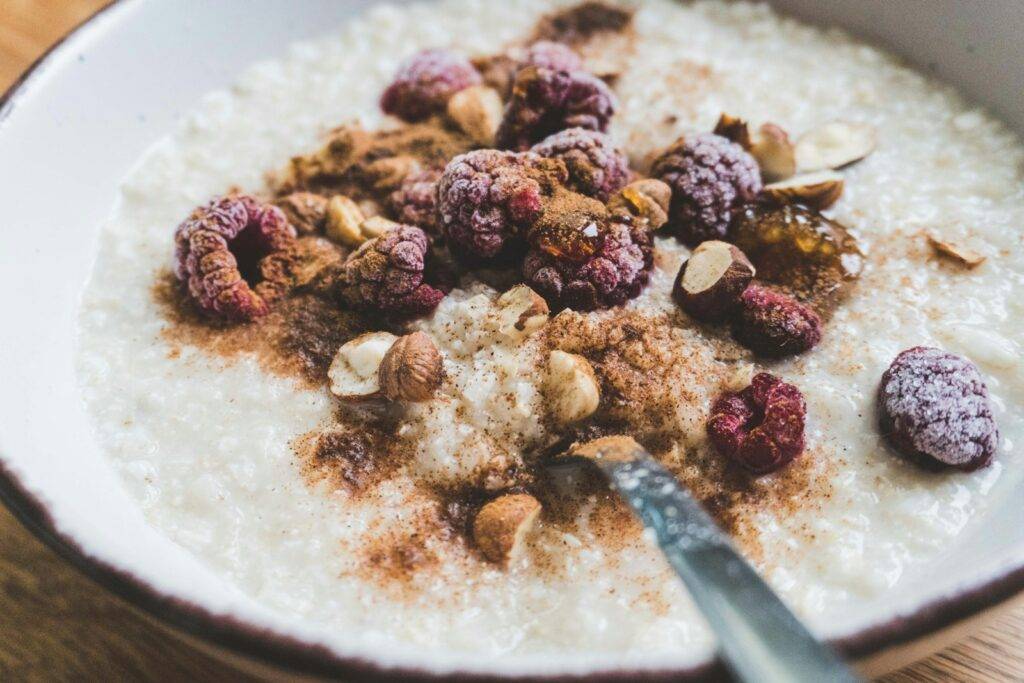
Start with porridge made from oats, topped with a portion of berries or a chopped pear and a spoonful of seeds. Depending on the oats, fruit and seed portion, this can provide a useful early contribution to the day.
If porridge is not your preference, choose a wholegrain cereal and add fruit, or have two slices of wholemeal toast with peanut butter and a piece of fruit. The NHS gives wholemeal toast with peanut butter and an orange as an example of a breakfast that can provide around 8g of fibre.
For more combinations, see our high-fibre breakfast ideas.
Mid-morning: only add a snack if you need one
You do not need to snack simply because a meal plan contains a snack box. If you are hungry, choose something that contributes fibre rather than treating the snack as nutritionally separate from the day.
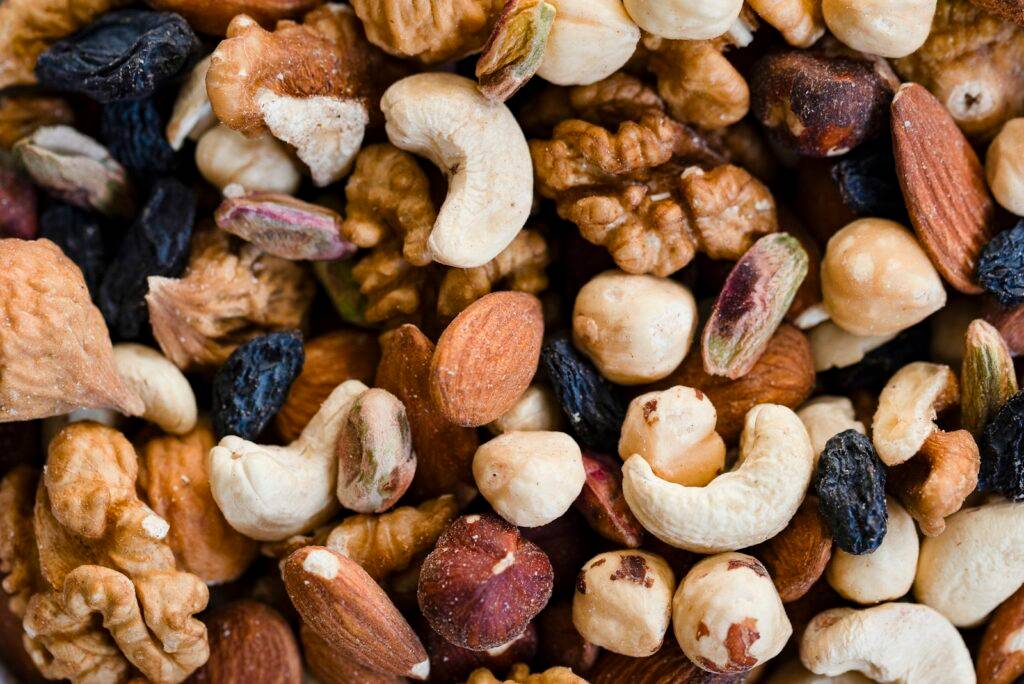
Examples include a piece of fruit, a small handful of unsalted nuts, oatcakes, rye crackers or vegetable sticks with hummus. If you are not hungry, move those foods into lunch or dinner instead.
Lunch: wholegrain base plus pulses and vegetables
A simple lunch could be a wholemeal wrap filled with hummus, salad vegetables and beans, followed by a piece of fruit. Another option is lentil soup with wholegrain bread. A skin-on baked potato with beans and salad is also a practical high-fibre lunch.
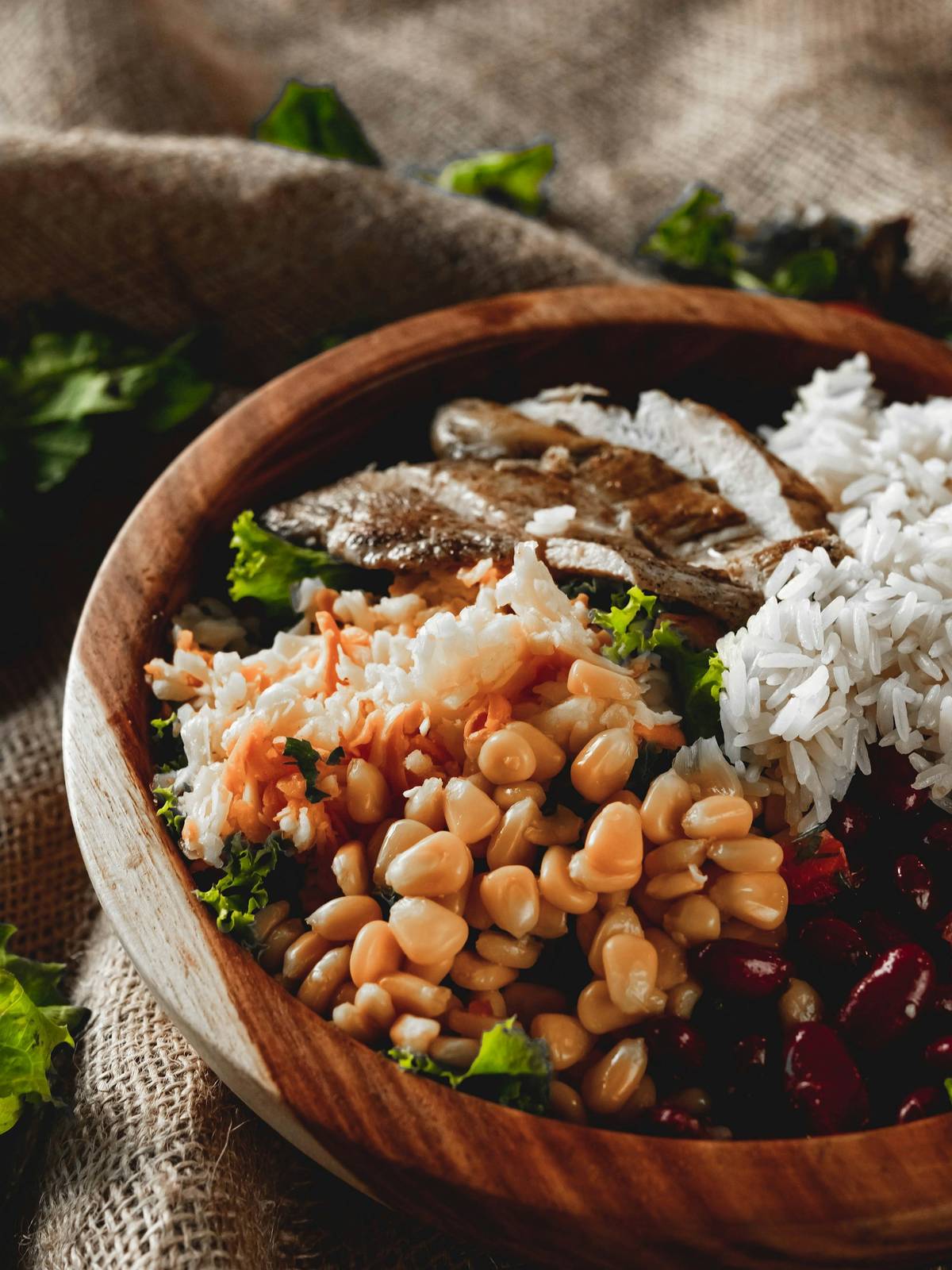
The most reliable way to build fibre at lunch is to combine at least two sources. Wholemeal bread on its own is helpful; wholemeal bread plus beans, vegetables or fruit is stronger. Brown rice on its own adds some fibre; brown rice with chickpeas and vegetables adds much more.
See our high-fibre lunch ideas for more workday and home-based options.
Afternoon snack: use it to close the gap
If breakfast and lunch were modest, an afternoon snack can make the daily target much easier. Try an apple with a small handful of nuts, oatcakes with hummus, or yoghurt with berries and a spoonful of seeds if those foods suit you.
Check portions rather than assuming every “healthy” snack is high in fibre. A plain yoghurt, for example, contains little or no fibre unless you add fruit, nuts, seeds or a wholegrain accompaniment.
Dinner: let vegetables and pulses share the plate
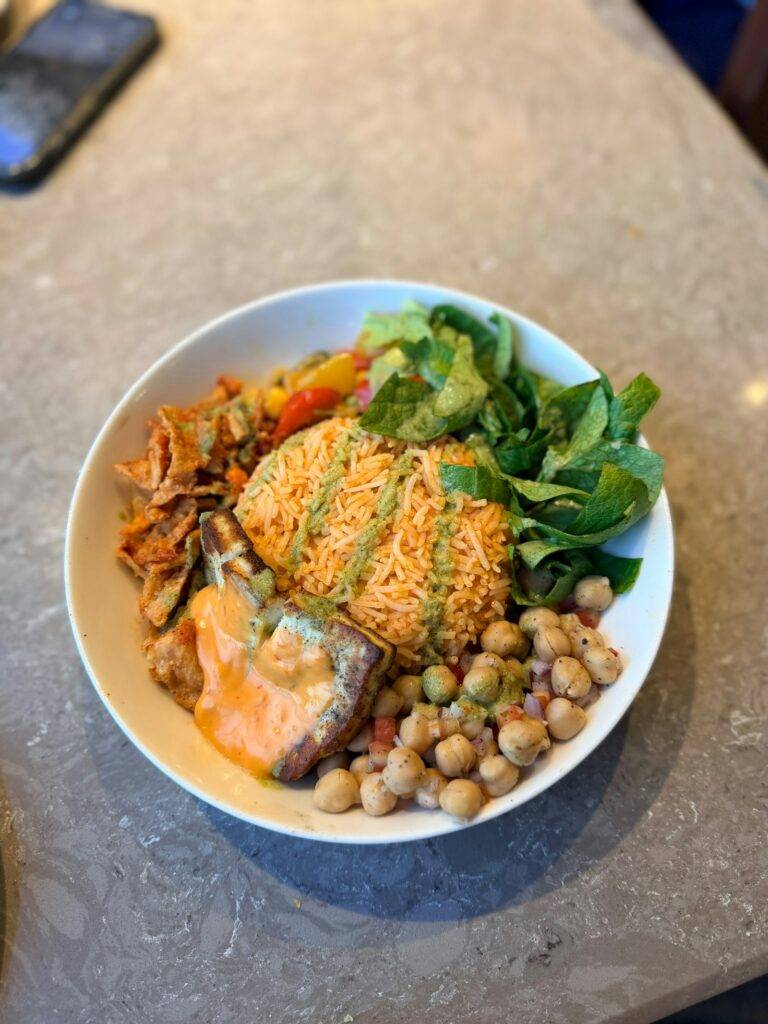
A strong dinner option is bean chilli with a skin-on baked potato and vegetables. Another is lentil and vegetable curry with brown rice. Wholewheat pasta with a tomato, vegetable and lentil sauce can also work well.
You do not have to make the meal vegetarian. Chicken, fish, eggs or another protein can sit alongside fibre-rich foods. Fibre comes from the plant part of the meal, so the key question is what wholegrain, pulse, vegetable, fruit, nut or seed is present.
Example one-day 30g fibre meal plan
- Breakfast: porridge oats with berries and seeds.
- Lunch: wholemeal wrap with hummus, chickpeas and mixed salad, plus a pear.
- Snack: oatcakes with peanut butter or a small handful of unsalted nuts and fruit.
- Dinner: lentil and vegetable curry with brown rice, or bean chilli with a skin-on baked potato.
Depending on products and portions, a day like this can reach or exceed the 30g target. Use the fibre figure on food labels if you need a closer estimate.
A second day if you do not like porridge
Breakfast can be wholemeal toast with peanut butter and an orange. Lunch might be a baked potato with beans and salad. Have fruit and nuts if you need a snack. At dinner, choose wholewheat spaghetti with lentil and tomato sauce plus vegetables.
This matters because a meal plan should not depend on one specific food. If you dislike oats, you can still build fibre with bread, potatoes, pulses, fruit and vegetables.
A third day using inexpensive cupboard foods
Choose a wholegrain cereal or toast at breakfast. For lunch, make bean soup with wholemeal bread. For dinner, add lentils to a tomato pasta sauce and use frozen mixed vegetables. Keep apples, pears, bananas, tinned fruit in natural juice, nuts or oatcakes available for snacks.
Tinned pulses, frozen vegetables, oats, wholemeal bread and skin-on potatoes can make higher-fibre eating affordable. You do not need fresh berries, specialist grains or premium “gut health” products to reach the target.
How to turn this into a seven-day pattern
Instead of writing seven completely different menus, repeat useful building blocks. Choose two breakfasts, two lunches and three dinners that you enjoy, then rotate them. This reduces shopping waste and makes the plan easier to maintain.
For example, alternate porridge with wholemeal toast at breakfast. Rotate a lentil soup, bean-and-salad wrap and baked potato at lunch. At dinner, use bean chilli, lentil curry and wholewheat pasta with vegetables. Add fruit and a fibre-containing snack where it fits.
Shopping list for the week
- porridge oats or a higher-fibre cereal;
- wholemeal bread or wraps;
- brown rice, wholewheat pasta or another wholegrain;
- potatoes to eat with the skin where suitable;
- tinned beans, lentils and chickpeas;
- frozen and fresh vegetables;
- fruit you genuinely like;
- unsalted nuts and seeds if suitable;
- hummus, peanut butter or another pulse/nut-based spread;
- oatcakes, rye crackers or other higher-fibre snack options.
How to compare fibre on food labels
Most packaged foods list fibre in the nutrition information. Compare similar products per 100g as well as per serving, because serving sizes can make products look more different than they are. NHS guidance notes that foods containing 6g or more fibre per 100g can be described as high in fibre.
Our UK food label guide explains how to compare products without getting lost in numbers.
Increase fibre gradually if your current intake is low
Going from a very low-fibre diet to 30g overnight can cause bloating, wind or discomfort. NHS bowel-health guidance commonly recommends increasing fibre gradually and drinking enough fluid alongside it.
Add one change at a time: switch breakfast first, then improve lunch, then add pulses to dinner. This approach is more comfortable for many people and easier to sustain.
Do not treat 30g as a reason to overeat
More fibre is not automatically better. Once you have a balanced pattern, there is no prize for pushing the number higher simply because you can. Very large portions of bran, seeds or pulses may be uncomfortable, especially if your body is not used to them.
The purpose of the target is to support a healthy dietary pattern, not to turn eating into a daily arithmetic test.
What if you have IBS, bowel disease or a medical diet?
Generic high-fibre advice may not suit everyone. People with certain bowel conditions, narrowing of the gut, recent gastrointestinal surgery or individual dietetic plans may need a different type or amount of fibre. If you have persistent abdominal pain, significant bloating, blood in your stool, unexplained weight loss or a major change in bowel habit, seek medical advice rather than simply increasing fibre further.
What if you have a small appetite or are trying to gain weight?
High-fibre foods can be filling. If you are underweight, losing weight unintentionally or struggling to eat enough, your immediate priority may be adequate energy and protein rather than maximising fibre. Our Healthy Weight Gain guide covers that different situation.
How to know whether the plan is working for you
After a week or two, ask practical questions rather than focusing only on a number. Are you eating more wholegrains and pulses? Are fruit and vegetables appearing more consistently? Is the plan affordable? Are the meals enjoyable enough to repeat? Are you comfortable digestively?
If the answer is yes, you probably have a sustainable framework. If the plan feels complicated, simplify it. One dependable breakfast and one reliable lunch can do more for long-term intake than seven elaborate recipes you never repeat.
A realistic way to use the 30g target
Think of 30g as a direction for your overall eating pattern. Build fibre into breakfast, include a wholegrain or pulse at lunch, let vegetables and pulses contribute at dinner, and use fruit, nuts, seeds or wholegrain snacks where appropriate. That structure makes the target far easier than trying to “catch up” with a large bowl of bran at the end of the day.
Reviewed: September 2026. General information for UK adults. Individual needs may differ because of age, pregnancy, digestive conditions or clinical advice.