Snacks are not automatically unhealthy. A snack can be a useful bridge between meals, especially on a long workday, after exercise, during travel, or when meals are spaced far apart. The problem is usually not snacking itself, but relying on snacks that add a lot of calories, sugar, salt or saturated fat without offering much fibre, protein or other useful nutrition.
The British Dietetic Association’s healthy snacks guidance notes that well-chosen snacks can contribute useful nutrients such as protein, fibre, vitamins and minerals. NHS guidance also recommends comparing food labels and choosing more whole foods such as fruit, unsalted nuts, plain popcorn, crackers and lower-sugar yoghurts where they suit your needs.
This guide is for ordinary adult snacking. It is not a weight-loss plan, and it does not assume everyone needs snacks. If you are not hungry between meals, you do not need to force them in.
Start with the reason you are snacking
Before choosing the food, ask why you want a snack. Are you genuinely hungry? Did lunch happen five hours ago? Are you about to exercise? Are you tired, bored or eating because food is within reach?
There is nothing wrong with eating for pleasure sometimes, but knowing the reason helps you choose the right response. If you are thirsty, a drink may be enough. If you are genuinely hungry, a more substantial snack with protein or fibre will usually last longer than a handful of sweets.
A useful snack often combines two things
One simple approach is to combine a carbohydrate or fruit with protein or healthy fat. That might look like:
- apple with peanut butter;
- oatcakes with hummus;
- wholegrain toast with egg;
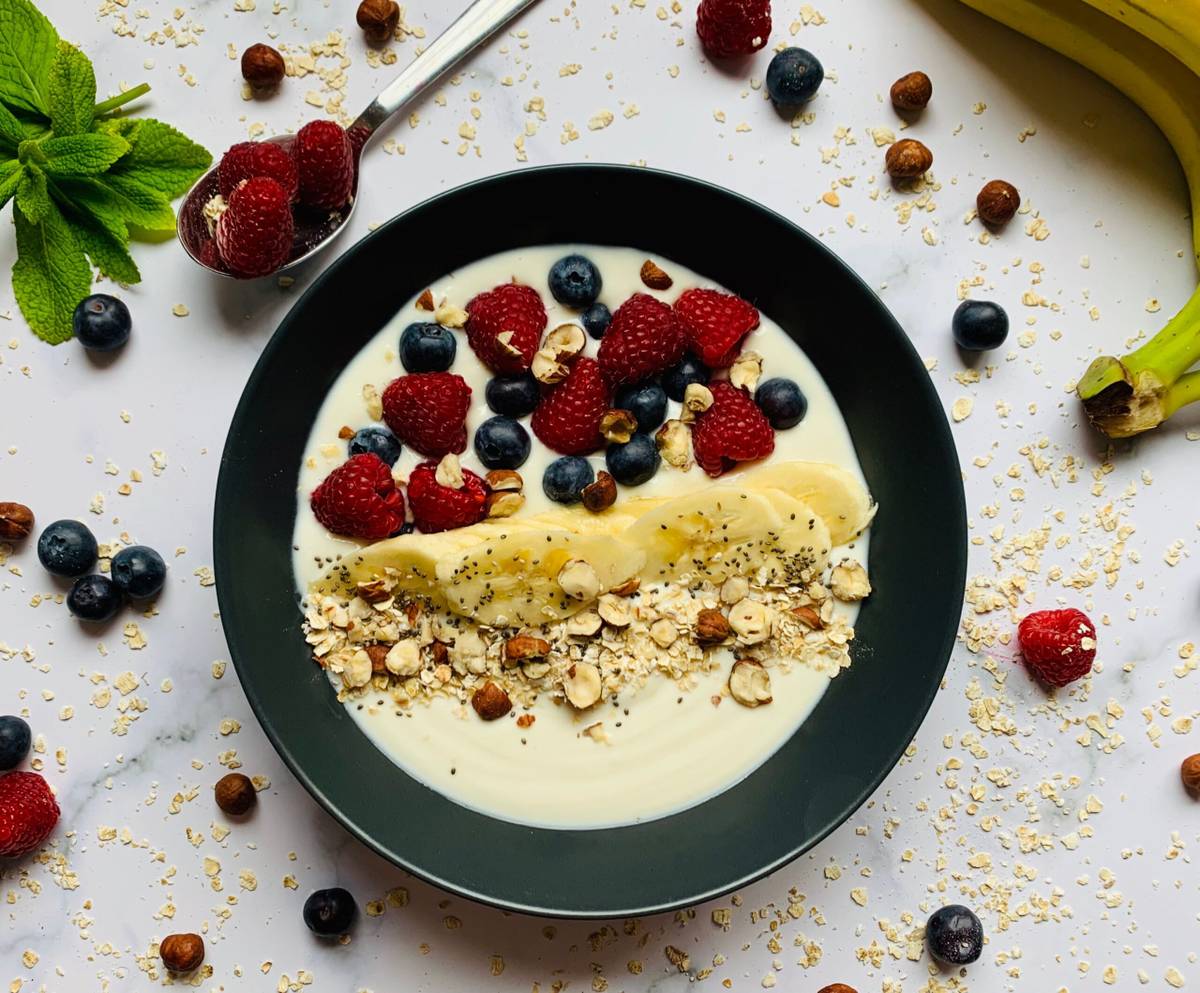
- yoghurt with berries;
- banana with a small handful of nuts;
- crackers with cheese;
- vegetable sticks with hummus.
This is not a rigid formula, but it often makes a snack more satisfying than eating a refined carbohydrate on its own.
Fruit is the easiest grab-and-go option
Bananas, satsumas, apples, pears, grapes and berries are easy to keep in the routine. Whole fruit contributes fibre and counts toward 5 A Day.
If you want something more filling, pair fruit with yoghurt, nuts, nut butter or cheese. That can be particularly useful if the next meal is several hours away.
Yoghurt can be useful, but compare the label
Yoghurt provides protein and can also contribute calcium. The amount of sugar varies considerably between products, particularly flavoured yoghurts and dessert-style pots.
Plain yoghurt with fruit is one simple option. If you prefer flavoured yoghurt, compare similar products and choose one with less added sugar where practical.
Our food-label guide explains how to compare products using the per-100g column rather than relying only on the front of the packet.
Nuts and seeds work well in small portions
Unsalted nuts and seeds provide protein, fibre and unsaturated fats. They are energy-dense, so a small handful is usually enough for an everyday snack.
Keep portioning simple. You do not need to weigh every nut, but eating directly from a large bag while working can make it easy to lose track of how much you have had.
If you have a nut allergy or swallowing difficulty, choose another option.
Oatcakes and wholegrain crackers are useful cupboard snacks
Oatcakes, rye crackers and wholegrain crackers store well and can be paired with hummus, cottage cheese, peanut butter, tuna, avocado or sliced cheese.
Check salt levels if crackers are a frequent part of your day. Different brands can vary considerably.
Healthy snacks do not have to be “diet” products
Products labelled “light,” “low fat,” “protein” or “healthy” are not automatically the best option. A lower-fat snack can still contain a lot of sugar, and a protein bar can still be high in calories or saturated fat.
Use the nutrition label and ingredient list to judge the food rather than the marketing words on the front.
Plain popcorn can be a practical snack
Popcorn can be a higher-fibre snack when it is not heavily coated in butter, sugar or salt. Air-popped or lightly seasoned popcorn is easy to portion and useful for people who want something crunchy.
Flavoured cinema-style or caramel versions are a different product nutritionally, so compare the label rather than assuming all popcorn is the same.
Boiled eggs are simple and filling
A boiled egg is portable, contains protein and can be prepared in advance. Pair it with fruit, vegetable sticks or a small slice of wholegrain toast if you need something more substantial.
Store cooked eggs safely in the fridge and follow normal food hygiene guidance.
Hummus works with more than carrots
Hummus can be paired with pepper strips, cucumber, wholegrain crackers, oatcakes or pitta wedges. It contributes some protein and fibre and can make vegetables more satisfying.
Shop-bought versions vary in salt and fat, so compare products if hummus is something you eat often.
Cheese can fit, but portion matters
Cheese provides protein and calcium, but many varieties are also high in saturated fat and salt. A modest amount with wholegrain crackers, fruit or vegetables can make a useful snack.
If cheese appears several times a day, compare portions and consider mixing in lower-fat dairy or non-dairy alternatives where appropriate.
Work snacks should survive real life
A “healthy snack” is not useful if it requires twenty minutes of preparation at 3pm in an office. Keep realistic options available:
- fruit;
- small packs of unsalted nuts;
- oatcakes;
- wholegrain crackers;
- individual yoghurt pots if you have a fridge;
- roasted chickpeas;
- plain popcorn;
- wholegrain cereal with milk at home or work.
Plan for the part of the day when you usually get hungry, not for an idealised routine.
Snacks for commuting and travel
Portable foods reduce the chance that hunger turns into whatever is available at a petrol station or train platform.
Bananas, apples, nuts, oatcakes, wholegrain cereal bars with reasonable nutrition, and crackers travel well. If you carry yoghurt, cheese or other chilled food, use an insulated bag where necessary.
Evening snacking needs a different question
If you are always hungry at 9pm, look at dinner first. Was it too small? Did it contain enough protein, vegetables and starchy carbohydrate? Was lunch also light?
If dinner was balanced and you still want a snack, choose something you enjoy. Yoghurt with fruit, toast with peanut butter, fruit and nuts, or a small bowl of cereal can all fit.
If the evening snack is more about habit or stress than hunger, changing the routine may help more than searching for a “perfect” snack.
Do not use snacks to compensate for skipped meals
A day of coffee, biscuits and random snacks is not the same as eating regular meals. If work is so busy that lunch disappears most days, fix the meal pattern rather than trying to build a nutrition plan entirely from snack foods.
Our healthy packed lunch guide gives practical options for adults who need portable meals.
Packaged snacks: use the traffic lights
Many UK packaged foods use front-of-pack traffic-light labels. Green generally means lower, amber means medium, and red means higher amounts of fat, saturated fat, sugars or salt.
You do not need every snack to be all green. The system is most useful for comparing similar products quickly. If two crackers are side by side, choose the one with less salt or saturated fat if everything else suits you.
Look at the portion as well as the per-100g figure
The per-100g column is useful for comparing products. The portion column tells you what you are likely to eat.
A small snack bar may look high in sugar per 100g but be eaten in a 25g portion. A large “share bag” may show nutrition for a tiny serving that bears little resemblance to what most people eat.
Use both columns rather than letting one number tell the whole story.
Snacks can help you eat more fibre
Fruit, nuts, seeds, oatcakes, wholegrain crackers, hummus and popcorn can all contribute fibre.
If your overall fibre intake is low, snacks are an easy place to improve it. Our high-fibre foods guide shows how to build fibre across the whole day.
Snacks can also help with protein
Protein-rich snack options include yoghurt, eggs, cottage cheese, cheese, nuts, seeds, hummus, edamame, tuna or tofu-based options.
You do not need a branded protein product unless it is genuinely convenient for you. Ordinary foods can do the job.
What about biscuits, chocolate and crisps?
They can still fit in a normal diet. The goal is not to ban every food you enjoy.
If biscuits, chocolate or crisps are your default snack several times a day, try changing only one occasion first. Replace the 3pm biscuit habit with fruit and yoghurt, or keep a smaller portion of crisps alongside a more substantial lunch.
A diet is easier to sustain when it allows enjoyment rather than treating ordinary foods as failures.
What about “protein bars” and energy bars?
Some bars are useful when you need something portable, but the name can be misleading. Compare calories, protein, fibre, sugar and saturated fat.
A bar with 20g of protein may also be very energy-dense. That could be useful for one person and unnecessary for another.
Choose based on what you need, not on the gym-style packaging.
Snacking when you are trying to gain weight
If you are underweight or have a small appetite, the usual “lower-calorie snack” advice may not suit you. You may benefit from more energy-dense snacks such as full-fat yoghurt, cheese and crackers, nut butter on toast, nuts, rice pudding or nourishing drinks.
See the BetterCare high-calorie snack guide for that specific situation.
Snacking when you have diabetes or another condition
People with diabetes, kidney disease, food allergies, gastrointestinal conditions or prescribed dietary restrictions may need more individual advice.
Do not assume a general snack list is automatically suitable. Follow your healthcare plan and ask a dietitian or clinician if you are unsure.
A practical snack list for home
- fruit and yoghurt;
- apple and peanut butter;
- oatcakes and hummus;
- wholegrain toast with egg;
- small handful of unsalted nuts;
- plain popcorn;
- crackers with cheese and tomato;
- banana with yoghurt;
- vegetable sticks with hummus;
- small bowl of wholegrain cereal and milk.
A practical snack list for work
- banana or satsumas;
- small pack of nuts;
- oatcakes;
- wholegrain crackers;
- yoghurt if a fridge is available;
- roasted chickpeas;
- plain popcorn;
- fruit with a small cheese portion.
Plan one problem time rather than the whole week
If your least useful snacking usually happens at 4pm, solve 4pm first. Put a snack in your bag or desk before the day starts.
This is often more effective than creating a seven-day snack timetable you will never follow.
The best snack is one that fits the rest of your diet
A snack does not have to be perfect. It needs to make sense in the context of your meals, hunger, activity and health needs.
Choose foods that add something useful—fruit, vegetables, fibre, protein or healthy fats—most of the time, and leave room for foods you simply enjoy too.
For the wider BetterCare approach to everyday meals, shopping and balanced nutrition, return to the Everyday Nutrition pillar.
Reviewed: September 2026. General adult nutrition information; individual dietary needs vary.